Latest videos
💎 Special Offer: starting from just $4.99! Get 50% OFF full access to the map + exclusive strategic updates: https://www.rfunews.com/pricing
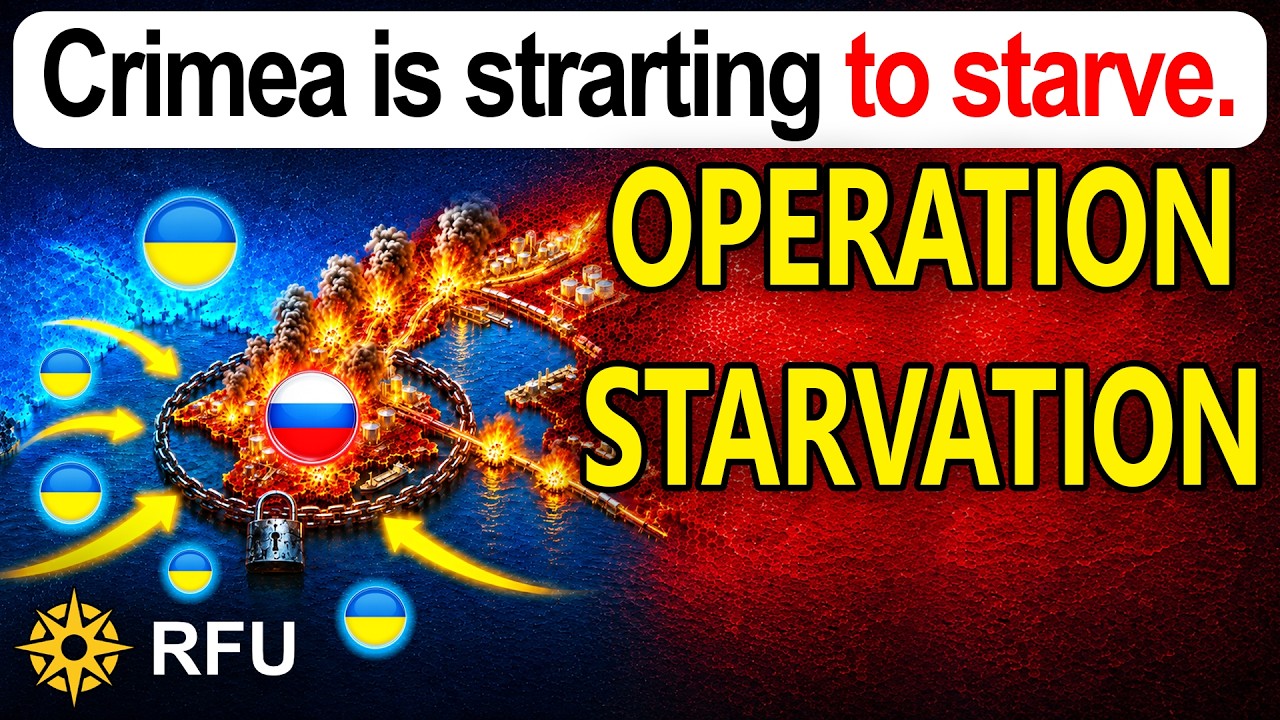
In this video, we will examine how Ukraine is draining Russians in Crimea.
Here, the fuel crisis is spiraling out of control as Ukraine has cut almost all supplies to the peninsula, forcing the gas stations to run dry. The situation is so dire that Russians are already getting arrested and sent to prison for posting photos of arriving fuel trucks and are forced to switch to horses as their cars cannot be used.
Crimea has faced severe shortages due to successful Ukrainian medium range strike operations and sustained attacks on the peninsula’s logistical connections. The effects have become increasingly visible, with queues of up to three hundred vehicles at a single station in Alupka. In some areas, as shortages worsen, some residents have turned to alternative means of transportation, including horses and walking, with footage from Crimea showing a noticeable increase in horse-drawn travel.
In parallel with efforts to disrupt incoming fuel supplies, Ukraine has intensified strikes against oil storage facilities across Crimea to deplete Russian fuel reserves and prevent the accumulation of new stocks. As part of this campaign, Ukraine struck the Semykolodezyanska oil depot, damaging at least two fuel tanks. The facility serves as an important transshipment hub for the storage and distribution of fuel across Crimea and other Russian-controlled areas. Ukrainian drones also targeted the marine oil terminal in Feodosia, which contains seven fuel-storage tanks and is used to transfer oil. Repeated Ukrainian strikes have already caused extensive damage to the terminal’s storage infrastructure, and even if Russia tries to repair it, Ukraine is waiting for them to refill the tanks to strike them again.
With the strikes on oil depots and logistical routes, Ukraine aims to reduce Russian military mobility. Ukraine's broader objective is not to create a humanitarian fuel shortage for civilians in Crimea, but rather to make the peninsula less useful as a Russian military base. If fuel deliveries to Crimea are disrupted, Russian units have to ration fuel, and patrols are forced to be scaled back. Rapid troop redeployments also become more difficult as they won’t have the means to transport them, reducing Russia’s ability to reinforce weaker sectors when the Ukrainians are conducting counterattacks. With this tactic, Ukraine is also forcing Russia to divert resources and allocate more air-defense systems to logistics protection and deploy more troops to guard supply routes. Ukraine seeks to increase the operational burden on Russian forces, reduce their combat effectiveness, and complicate Russia's ability to use Crimea as a hub for military operations in southern Ukraine.
The cumulative impact of Ukrainian strikes has also forced authorities to introduce strict fuel-rationing measures across Crimea. In Sevastopol, gasoline purchases have been restricted to twenty liters of fuel per week through a QR-code system. Drivers receive a personal QR code that can only be used between nine AM and nine PM, while gas stations remain closed outside those hours, and gasoline sales have also been concentrated at just three stations. Cash purchases of fuel have been suspended for several days, and no new fuel vouchers will be issued in the near future. Officials state that these measures are intended to ensure fairness, but the real reason is to prevent abuse because cash cannot be traced, in contrast to the QR code system. These restrictions forced Russians to use their vehicles less and even switch to horses.
As fuel shortages worsen, Russians started to film fuel trucks because they have become so rare. As a response, authorities have prohibited the recording of fuel trucks and the publication of their routes on social media because it exposes them to Ukrainian intelligence. Under Russian law, those accused of providing such information can face prosecution under provisions related to aiding and abetting sabotage, offenses that carry prison sentences of between ten and twenty years. The rationale behind these measures is that Ukraine does not maintain continuous surveillance coverage over all of Crimea, so they rely on information gathered from social media posts. As a result, videos revealing the location, timing, or direction of fuel convoys provide valuable intelligence.
Overall, the situation in Crimea reflects a sustained effort to disrupt oil supplies and degrade the ability of Russian forces to move. As both supply disruption and information control intensify, the peninsula’s fuel network is being forced into a heavily constrained state. This is especially problematic for Russia, as they planned to use Crimea as a launchpad for military operations in the Zaporizhzhia oblast, and now they are forced to divert supplies to it to keep it afloat.

🔴 Our interactive news map: https://www.rfunews.com/map
🔴 Subscribe to unlock full access to the map + exclusive strategic insights: https://www.rfunews.com/pricing
Today, there are interesting updates from the Liman direction.
Here, Ukrainian forces launched a major mechanized assault against the Russian bridgehead north of Liman. After the Russians had spent over a year trying to outflank the Ukrainian town, the Ukrainians are threatening to starve out and collapse the entire salient in less than a month.
Russia’s lack of advance in this sector is due to it being defended by the Ukrainian Third Army Corps, so the Ukrainian command has recognized that the Russian bridgehead had become strategically vulnerable, and the Ukrainian plan switched from mere containment to cutting it off entirely.
The Russian bridgehead is supplied mainly through its northern section, where the Zherebets River is narrower, but Russian logistics are still under constant pressure from Ukrainian artillery and drone strikes. Additionally, Russian armored vehicles cannot reliably cross the river, while Russian artillery support has been degraded by persistent Ukrainian reconnaissance and counterbattery operations. Ukrainian planners identified these weaknesses and designed an operation specifically aimed at exploiting them.
The Ukrainian attack itself was meant to be launched from the north through the area around Ridkodub, where superior road infrastructure would offer Ukrainian mechanized forces an opportunity to move rapidly before Russian defenders could react. The plan called for armored vehicles to penetrate through the outskirts of the village and then advance along two tree lines that provided partial cover from Russian observation to deploy forces in the larger forested areas between Nove and Katerynivka, which can be used concealed infiltration routes into both settlements with the support of FPV, artillery fire and reconnaissance drones.
If we take a look at the topographic map, we will see that capturing this zone would place Ukrainian forces on the central high ground of the bridgehead. From that position, they could threaten Russian forces in multiple directions while simultaneously controlling the primary supply corridor feeding the entire bridgehead. If successful, the operation would place all Russian troops west of the river in a highly vulnerable position, forcing them to rely increasingly on supplies through aerial drone deliveries for sustainment. However, even that would be problematic given the fact that the Third Army Corps possesses some of Ukraine’s most capable anti-drone and electronic warfare units integrated directly into the corps structure.
Geolocated footage released by Russian units defending the sector showed how the Ukrainian assault unfolded, with Ukrainian armored columns advancing with Cobra-Two mine-resistant vehicles and Ukrainian-produced BTR-Four-E armored personnel carriers. Russian forces initially struggled to respond, with their standard FPV drones proving largely ineffective against the intense Ukrainian electronic warfare coverage shielding the attacking force. This forced Russian operators to switch to less-widely available fiber-optic drones, which are immune to radio jamming but require additional preparation and deployment time.
That delay in effective response proved critical, as the geolocated Russian footage confirms that Ukrainian forces managed to advance between three and five kilometers before the first Russian drones reached the assault groups. One video shows a Ukrainian armored personnel carrier being struck by a drone only after it had already completed its mission and was returning toward Ukrainian positions, notably after having successfully deployed its infantry dismounts.
Additional footage shows Ukrainian soldiers moving through the tree lines and establishing positions inside the contested area while Russian drones attempt to engage them. With Ukrainian releases delayed for operational security reasons, we have to rely on Russian reporting that fighting in the area remains ongoing, adding that Ukrainian troops succeeded in reaching and capturing territory that directly threatens Russian supply routes. As a result, the bridgehead is already experiencing growing logistical difficulties, and isolated Russian units may soon face a difficult choice between retreating closer to the river crossings or remaining in increasingly unsustainable positions.
Yet, official Russian sources attempted to portray the battle very differently, claiming that eighty Ukrainian soldiers had been killed within thirty minutes and that numerous Western-supplied vehicles had been destroyed. However, more reliable Russian military analysts were notably a lot less optimistic, and it was quickly revealed that some of the footage used to illustrate the supposed Russian defensive success originated from battles fought last summer over a year ago, creating a sharp contrast...
💎 Special Offer: starting from just $4.99! Get 50% OFF full access to the map + exclusive strategic updates: https://www.rfunews.com/pricing
In this video, we will analyze why politicians in Russia started begging to end the war.
Here, Russia’s economy can barely sustain the cost of the war for much longer, which is a looming disaster as pressure from the elite is rising and state control is weakening. Now, even Russian politicians are aware of the severity of the problem, begging Putin to stop the war before it breaks Russia.
Recently, a Russian State Duma deputy, Renat Suleymanov, said that the war needs to end now because Russia’s economy cannot sustain the current tempo. He also stressed that forty percent of the federal budget already goes to defense and security, which is crowding out normal spending. Defense spending is also driving inflation, which is officially five percent, and forcing cuts in civilian spending. Suleymanov warned that even after the war ends, Russia will face problems reintegrating hundreds of thousands of returning troops who experienced extreme violence, and that Russia will still carry these costs after peace.
Because of the combined budget, manpower, and infrastructure problems, the Russian economy can barely sustain the war at this intensity. Notably, Russian losses have exceeded one point four million casualties in the war, including dead and wounded, according to the Ukrainian general staff. This is critical because this year, Russia was unable to recruit as many soldiers as it lost from month to month, which means that the size of its army is now decreasing. At the home front, Russia's layered air defense system can no longer defend all critical infrastructure, because from the start of this year, Russia has lost almost two hundred air defense systems. This leaves Russia’s refineries and export infrastructure undefended against Ukrainian strikes. Ukraine exploited this and reduced Russia’s export capacity and even forced it to import finished oil products. Because of these strikes, Russia’s oil revenue is collapsing, which is why Russian officials are warning that the current tempo is unsustainable.
Against this backdrop, Zelensky sent an open letter to Putin, but the message was aimed at the war weary Russian elite, who have money, networks, and institutional access, making them dangerous for Putin. The proposal for a meeting was part of Kyiv’s attempt to highlight Moscow’s economic weaknesses and prove that Russia is not invincible, as also shown by the emergence of harsh criticism from Russian officials. The letter was intended to draw the attention of Russia’s elite to the fact that they are losing billions of dollars because of asset seizures and sanctions and to make them see the war as a personal financial threat, not just a national burden.
As a result of the economic and war related problems, Putin is slowly losing his control over the narrative and the expectations of the elite, not necessarily control over the state. Officials and business leaders are increasingly seeing events unfolding independently of Putin’s decisions, which suggests that the Kremlin has lost its control over defining the country's future and that pressure is growing among the elites. This shift is being driven by the mounting costs of a war that was originally planned as a quick victory but has become impossible to ignore for the Russians. Russia's business elite are demanding greater predictability because Western sanctions forced them to bring their assets back to Russia, and they had to watch five trillion rubles worth of private assets be confiscated over the past three years. Because of this, they increasingly want clear rules, stronger property rights, and confidence in the country's economic future, which is deteriorating because of the war. At the same time, the informal social contract between the Russian state and society has collapsed because, previously, the government largely stayed out of citizens' private lives in exchange for political passivity. Today, that arrangement has been replaced by expanding repression, mobilization, and increasing state control, with widespread internet restrictions serving as one of the clearest examples. As a result, the Kremlin finds itself in a self-defeating cycle, and the current system can endure only as long as Putin remains in power, yet every measure he takes to preserve and strengthen it ultimately accelerates its long term decline.
Overall, the pressures facing Russia are no longer confined to the battlefield but have expanded to the home front as well. The economic decline, combined with increasing elite dissatisfaction, is reinforcing itself, making the problem even worse for Putin. The longer Putin continues the war, the more the war itself becomes the force weakening Russia from within.

💎 Special Offer: starting from just $4.99! Get 50% OFF full access to the map + exclusive strategic updates: https://www.rfunews.com/pricing
In this video, we will analyze how Ukraine is rapidly turning Crimea into an island.
Here, Kerch has become the target of the intense Ukrainian campaign to isolate the Crimean Peninsula, with major fires erupting on both sides of the strait. Due to the non-stop Ukrainian strikes, the Russians are now bracing for the final decapitation strike of the last remaining logistical lifeline.
During the night of June Twenty-second, Ukrainian forces launched a large-scale operation against targets surrounding the Kerch Strait, which unfolded in carefully planned stages. Ukrainian forces first focused on weakening the defensive shield protecting the area, which hosts the Kerch Bridge, one of the most densely protected assets in Russia. The Ukrainian strikes targeted four S-Four-Hundred radar stations, two Pantsir air-defense systems, and both Kasta and Nebo-U radars near Kerch. These systems form critical elements of Russia's air-defense architecture around the bridge and eastern Crimea. By degrading long-range detection and defense capabilities, Ukraine created temporary corridors through which follow-on strike waves could penetrate more effectively.
The timing was particularly significant, as Russian authorities had recently announced the arrival of new fuel shipments intended for distribution across Crimea. Ukrainian commanders appear to have waited until large quantities got concentrated in a vulnerable location before striking them with long-range drones, and with parts of the defensive network disrupted, the second wave set the Crimean side of the strait on fire. One of the main targets was the Tes Terminal One fuel depot in Kerch, located less than a kilometer from the Crimean Bridge. Fires erupted across multiple storage tanks, with footage confirming that six of seven major fuel reservoirs were hit. Traffic on the Crimean Bridge was suspended for more than seven hours as explosions and air-defense activity spread across the area.
The third phase extended the fires across the strait into Russia's Krasnodar region. Ukrainian drones struck infrastructure around Port Kavkaz on the Chushka Spit, targeting fuel storage facilities and maritime transport assets that help sustain Crimea. Flames engulfed an oil terminal, while the ferry Panagia was reportedly damaged during the attack. The significance of these strikes lies in their coordination, because Ukraine not only targeted the fuel arriving in Crimea, but simultaneously also the infrastructure responsible for sending it there. The receiving hub and supply source were hit in the same operation, creating pressure from both directions, setting both shores on fire and disrupting logistics throughout the entire local transport system.
The scale of the attack has fueled growing concern among Russian military analysts, as many now openly expect a devastating follow-up strike on the Crimean Bridge after both shores were set ablaze. Their concerns are based on the growing range of tools Ukraine now possesses, with Russian analysts pointing to the upgraded FP-Two drones carrying larger warheads, the new long-range Behemoth drones with a low-flying trajectory and enough explosives to damage a bridge, and the already battle-proven Neptune and Flamingo missiles that recent strikes have proven are hard for the Russians to intercept. The Russians also pointed out the increasing role of Ukrainian naval drones and recently presented autonomous underwater systems, some of which have reportedly already been detected near the bridge, as they expect a second, much larger, combined naval and air strike that can overload even the extensive defense system of the Kerch Bridge.
These fears have been reinforced by repeated Ukrainian strikes against the bridge network connecting Crimea to Russian-controlled parts of Kherson and Zaporizhia. Satellite imagery shows growing damage to crossings near Henichesk, the Arabat Spit, and Armiansk. Multiple holes are visible in bridge decks, forcing Russian forces to deploy pontoon crossings and improvised bypass routes. Repeated FP-Two and Behemoth strikes have demonstrated that Ukraine can reliably return to hit the same targets again after repairs begin, confirming the Russian fear that the same capabilities can be applied against the Kerch Bridge itself.
Overall, whether Ukraine chooses to destroy the bridge or use it as bait to concentrate and then destroy incoming Russian supplies remains to be seen. However, what is clear is that Crimea is becoming increasingly isolated, as the northern land routes are under sustained pressure, reducing its effectiveness as a military hub. Now, fuel infrastructure is burning on both sides of the strait in the south, and Russian analysts openly acknowledge that Ukrainian strike capabilities and production of long-range...
🔴 Our interactive news map: https://www.rfunews.com/map
🔴 Subscribe to unlock full access to the map + exclusive strategic insights: https://www.rfunews.com/pricing
Today, there is important news from Sweden.
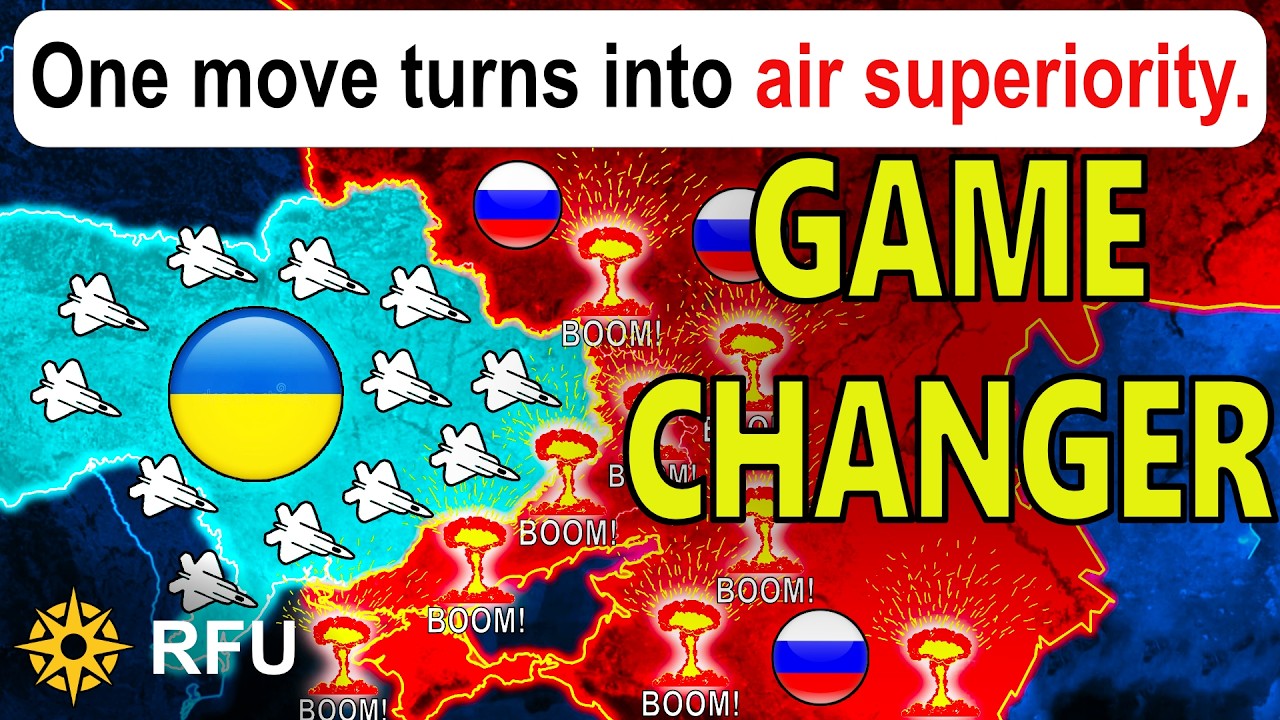
Here, Sweden decided to fundamentally change the balance of air power over Ukraine and completely transform Ukrainian air combat capabilities. What initially looked like another military aid package has rapidly turned out to be something much bigger, which will give Ukraine full control of the skies.
Everything is set to change in the Ukrainian sky, as Sweden officially announced during Zelensky’s visit that they approved the purchase of twenty new Gripen EF variants for the Ukrainian Air Force. However, the Swedes just made the deal a lot bigger, as they announced the transfer of sixteen Gripen CD fighter jets to Ukraine free of charge, with the CD variants arriving in Ukraine by the start of two-thousand-twenty-seven. During Zelensky’s visit, Swedish Gripen fighters escorted his aircraft, almost serving as a window into the future of Ukraine’s air force. On top of that, Sweden added a massive military support package worth four billion euros, including Meteor missiles, long-term maintenance support for the purchased Gripen aircraft, and additional funding for Ukrainian drone production.
Ukraine and Sweden have been quietly preparing this transition for months, with the formal letter of intent signed in late two thousand twenty five laying the groundwork for extensive cooperation, with the eventual purchase of up to one hundred fifty aircraft. Ukrainian pilots have already undergone introductory Gripen training and familiarization flights, while Swedish and Ukrainian defense officials coordinated logistics, maintenance, and operational integration behind the scenes. Even Ukrainian Foreign Minister Andrii Sybiha’s selfie with Gripens in the background posted last week appears to have been a deliberate hint that the deal was struck, with Zelensky making it official.
However, possibly more importantly, Ukraine will also receive Meteor long-range air-to-air missiles together with the Gripens. This can be one of the most significant aspects of the deal because the Meteor fundamentally changes how Ukrainian pilots can engage Russian aircraft. The missile can strike targets at distances approaching two hundred kilometers and possesses one of the largest no-escape zones in the world. This means Russian pilots will both be engaged from a much further distance than before, and have a much smaller chance of being able to safely disengage once Ukrainian jets fire their missiles, even if they immediately turn away or attempt evasive maneuvers.
For Ukraine, this creates a massive operational advantage, as Russian aircraft currently rely heavily on operating behind the frontline while launching glide bombs from relatively safe distances. Meteor missiles threaten these aircraft far earlier, pushing the safe zone for Russian pilots too far behind the frontline to conduct devastating glide bomb attacks on Ukrainian cities and defensive positions. This means that Russia’s most effective aerial support tactic is now well within Ukraine’s ability to intercept.
The Gripen jet itself is equally important because it was designed specifically for the kind of asymmetric warfare Ukraine is already fighting. During the Cold War, Sweden expected that Russian missile strikes would quickly destroy traditional airbases. As a result, the Gripen was engineered to operate from highways, improvised runways, and dispersed locations with minimal crews and extremely rapid turnaround times. Specifically, it only takes around ten to fifteen minutes to fully rearm and refuel the Gripen, with a team of one certified technician and five conscript mechanics needing only two trucks with fuel, ammunition, and basic equipment to achieve these rapid times.
This fits Ukraine’s wartime reality perfectly, as Ukrainian aircraft are already constantly relocating between temporary bases to survive Russian missile attacks. The difference is that Ukrainian pilots have been adapting older Soviet aircraft to this role, while the Gripen was purpose-built for it from the beginning. Small maintenance teams can refuel and rearm the aircraft within minutes, allowing very high sortie rates even under constant missile threat.
At the same time, the future Gripen EF variants represent an even larger leap forward, as unlike the older CD models, the EF incorporates the new superior Raven radar, advanced infrared search systems, which will allow Ukrainian pilots to detect and engage threats much earlier. Combined with a modern electronic warfare suite, it improves survivability against Russian air defense systems. The improved fuel capacity for extended combat range with a more powerful engine gives the Gripen the ability to carry significantly more weapons, including up to eight Meteor missiles. All this allows the Gripen EF to transform...

💎 Special Offer: starting from just $4.99! Get 50% OFF full access to the map + exclusive strategic updates: https://www.rfunews.com/pricing
Russia has finally been forced to suspend transit through the Azov Sea, effectively shutting down one of its most important commercial and military shipping corridors. Following devastating Ukrainian attacks on over a hundred Russian vessels off the coast, Russian ports have now officially surrendered to the Ukrainian Crimea-campaign, and stopped accepting new applications for passage through the Kerch Strait. However not just this, as navigation through the canal linking the Don River with the Sea of Azov was also suspended, effectively shutting down all maritime transport into Crimea.
The immediate trigger for this measure was Ukraine’s extraordinary maritime campaign, with Russian authorities suspending transit after Ukraine destroyed and disabled one hundred and six Russian vessels, most of them tankers, within only eight days. The consequences extend far beyond the waterways themselves, as ports throughout the region have been forced to halt new loading operations because ships can no longer enter or leave. As a result, trucks carrying export goods have begun backing up for miles outside terminals, unable to unload their cargo.
With Ukrainian drones beginning to target the ports and their storage infrastructure, Ukrainians are forcing Russians’ own security measures to quickly contribute to the major paralysis affecting one of Russia’s most important export regions. Up to thirty percent of Russian oil shipments and ninety percent of grain exports move through the Black Sea system, so the Ukrainian strikes are depriving Moscow of valuable revenue of fifty to sixty billion US dollars.
However, sinking ships represented only the second phase of a much broader Ukrainian operation. Once Russian vessels operating throughout the Sea of Azov suffered heavy losses, Ukrainian planners shifted their attention toward the ports expected to shelter the surviving fleet. This strategic logic proved highly effective, as Ukrainian long-range drones began striking the supporting infrastructure inside the ports themselves.
Footage confirmed attacks against facilities in Azov and Taganrog, demonstrating that terminals, fuel infrastructure, and logistics areas had become the next priority after the surface vessels had withdrawn. Russian authorities suddenly were left without options, as allowing ships to gather inside ports would simply transform them into stationary targets alongside fuel depots, warehouses, and loading equipment. Closing the ports became the only practical option, but it didn't help to minimize the danger, as this solution merely prevented ships from concentrating together. It could not protect cranes, terminals, storage tanks, repair facilities, and supporting logistics infrastructure, all of which remain vulnerable to continued Ukrainian strikes. Due to this, even if the ban on maritime traffic is eventually lifted, damaged port infrastructure will continue limiting Russian exports and naval operations for an extended period.
It is important to understand that the Ukrainian maritime campaign follows an equally devastating first phase directed against Crimea’s ground logistics. In this first phase, Ukrainian forces systematically targeted bridges connecting Crimea with Russian-controlled territories in southern Ukraine, repeating the strikes once the Russians started repairing them or establishing improvised crossings, leaving the Kerch Bridge as Russia’s primary remaining connection. At the same time, Ukrainian drones devastated traffic along the Mariupol-Crimea highway, turning it into a junkyard for military trucks, fuel convoys, and repair equipment, blocking all Russian road-based transport. Recent reports show that cargo traffic collapsed by seventy-one percent, falling from almost four thousand vehicles daily to around one thousand one hundred.
Combined with strikes on energy and fuel infrastructure in Crimea, Russian fuel shortages only worsened, electricity blackouts sometimes lasting over twenty-four hours became commonplace, and collapsing tourism throughout the peninsula crippled the local economy that so depends on it. Now, Ukraine is applying precisely the same sudden, concentrated pressure at sea, extending the isolation from land to maritime logistics, showcasing how Russia's control over Crimea turns symbolic with each passing day.

💎 Special Offer: starting from just $4.99! Get 50% OFF full access to the map + exclusive strategic updates: https://www.rfunews.com/pricing
In this video, we will analyze how Russian soldiers now openly threaten Putin with a revolt.
Here, decorated Russian veterans issued public demands directly to the Russian president, with an ultimatum to meet or face the consequences of a second Wagner rebellion. With regular army soldiers now on the brink of a mutiny, what follows can tear the Russian army in two, and turn Russia’s power order upside down.
А recently released viral video by a Russian serviceman from the Voronezh region who fought in Ukraine and has built a significant social media following sent shockwaves. It showed him calling for representatives of the Defense Ministry and other security agencies to approach him so he can deliver a message directly to Vladimir Putin. According to the veteran, thousands of Russian soldiers are being imprisoned in pits, tortured, abused, and declared missing after refusing to follow suicidal orders or surrender money to their commanders. He demanded a live televised meeting with Putin, warning that if such a meeting did not occur, the army would turn its weapons against the Kremlin. In a follow-up recording, he insisted the threat was not a bluff and stated that any action against him or his family would become a signal for further action. The video rapidly accumulated millions of views across social media, giving the allegations a wide audience inside and outside of the Russian military.
The angry message reflects long-standing complaints surrounding Russian assault tactics, as Russian commanders have repeatedly relied on costly frontal attacks against prepared Ukrainian defenses, mined terrain, and heavily monitored approaches. Officers directing operations from a safe rear headquarters avoid the danger of confronting Ukrainian lines, while frontline soldiers bear the overwhelming casualties. Refusing orders reportedly exposes troops to physical punishment, confinement, execution, or accusations of desertion followed by a transfer to a penal unit. Such practices replace voluntary discipline with forced coercion, completely eroding the trust between commanders and the rank-and-file. The significance of the public appeal lies not only in its accusations but also in the identity of the messenger. A decorated veteran publicly challenging Putin represents a far more serious warning than anonymous online criticism because it comes from someone who openly identifies with Russia's military and has the merits to prove it.
The last time this happened, it led to Yevgeny Prigozhin's Wagner rebellion, where a fifty thousand strong mercenary army took control of the city of Rostov and Russian army headquarters before beginning a march on Moscow itself. This also began with public accusations against Russia's military leadership over unnecessary losses, corruption, and battlefield mismanagement before escalating into an armed rebellion. However, Wagner was a separate private military company with a limited sphere of influence, while discontent spreading inside the regular Russian military would present a fundamentally different challenge. The regular army provides the manpower, armor, artillery, logistics, and command structure sustaining operations across the entire front; so any localized refusals, disciplinary breakdowns, or disrupted coordination could complicate military operations and create opportunities that Ukraine might seek to exploit, even without producing a nationwide uprising.
The video appeal reveals another deeper issue, as the Russian army is increasingly operating in two very different military realities. Highly trained soldiers like drone operators, electronic warfare specialists, communications personnel, and many more, generally face lower casualty rates because their skills are difficult to replace. Meanwhile, the conventional infantry continues conducting many of the highest-risk attacks with close to zero chance of survival. This builds on the fact that these specialist soldiers, such as drone operators, are often the ones who strike and kill deserters or surrendering soldiers; creating not just resentment for the unequal distribution of danger, but full-on hatred for the specialists that are actively killing them every single day.
Despite Russia maintaining extensive internal security structures, military police, and intelligence services specifically designed to suppress collective dissent, the Wagner rebellion started with these exact videos of dissatisfied soldiers calling out their leadership directly. Now we see the same pattern in decorated soldiers with a high following, and if this repeats in larger scale, it could end up becoming worse for Russia than the Wagner rebellion that started it all.
💎 Special Offer: starting from just $4.99! Get 50% OFF full access to the map + exclusive strategic updates: https://www.rfunews.com/pricing
In this video, we will analyze why Russia lost its chance to end the war quickly.
Here, the Ukrainian president offered the Russian president the last chance to end the war for good and save face before it's too late. However, Putin explicitly rejected the deal and chose to continue the war, pushing Russian beyond the point of no return.
Recently, Putin faced an unexpected opportunity to exit the war and freeze the frontline where it now stands. Ukraine’s Foreign Minister Andrii Sybiha warned that conditions for Russia will only deteriorate as battlefield losses and logistical breakdowns will only increase. Now, Russia faces economic decline because of the attacks on its energy sector and sanctions, which created the opportunity for Ukraine to address Putin from a position of strength with an open letter.
In his open letter to Putin, Zelensky calls for an end to the war through direct, face-to-face negotiations in a neutral country. Simultaneously, he reiterates Ukraine’s willingness to pursue peace by proposing a ceasefire for the duration of negotiations and advocating an all-for-all prisoner exchange, in stark contrast to Russia’s determination to continue the war. Zelensky openly stated that Ukraine knows that the Kremlin intends to continue the war at least until two thousand and twenty-eight, which they hope will give their army enough time to capture the rest of Donbas. However, Zelensky underlined that Russia is suffering over thirty thousand casualties each month, with approximately two-thirds of these losses being fatalities. This also helps to explain why Russia is unable to maintain its offensive tempo in reality. Concluding his message, Zelensky addressed Putin personally, arguing that he will ultimately have to fight for his own survival rather than for Russia itself, because once the Russian population grows tired of the war, changes will occur one way or another, indicating that Ukraine sees the distress of Russian citizens as a serious destabilizing factor for Russia.
Despite Ukraine’s increasingly improving position on the battlefield, Kyiv continues to emphasize its desire for peace and negotiations. Ukrainian leaders argue that Ukraine is no longer merely preventing a Russian victory but is beginning to achieve tangible strategic results, such as territorial gains and the effective disruption of Russia’s logistics, fuel, and oil revenue. This shift is becoming increasingly visible on the ground because, for the first time in nearly three years, Ukraine has begun gaining territory monthly rather than losing it. Notably, Ukraine recaptured six hundred square kilometers this year, while Ukrainian medium-range strike campaigns are disrupting logistics along major highways throughout Russian-controlled areas in Ukraine. This significantly restricts Russia’s ability to supply frontline forces and reduces their offensive capabilities. Simultaneously, Ukraine’s long-range strike operations continue to attack oil refineries, fuel infrastructure, and defense-industrial facilities, putting pressure on Russia’s war-oriented economy and reducing its capacity to sustain military operations and even meet budget demands. The combination of these factors puts Ukraine in a position of increasing strength, as confirmed by Zelensky’s statement.
Although the letter was directed at Putin, in reality, it was an open statement intended for the Russian elite, which has become tired of the war. This is proved by the statements of heads of major corporations, who criticize the high interest rates and complain about falling demand. Zelenskyy sought to challenge the perception of Russia’s supposed superiority, which is hard to maintain as strategic targets inside Russia burn every day. As the war drags on, these strikes will continue, and Russia will find it increasingly difficult to finance the war. The letter will not spark an uprising in Russia, but it will force the elites to question whether continuing the war is beneficial for them and show the growing divide between war objectives and the cost required to achieve them, which is increasingly falling on the shoulders of Russia’s richest people.
Overall, Putin rejected the Ukrainian’s proposal for negotiations, which means he missed his last chance to secure relatively favorable terms for a settlement of the war he started. While Ukraine continues to gain momentum on the battlefield and deepen strikes against Russia’s military and economic infrastructure, Moscow appears determined to continue fighting. Because of this, Moscow's position will only worsen, and any future negotiations are likely to take place on terms more favorable to Kyiv.
💎 Special Offer: starting from just $4.99! Get 50% OFF full access to the map + exclusive strategic updates: https://www.rfunews.com/pricing
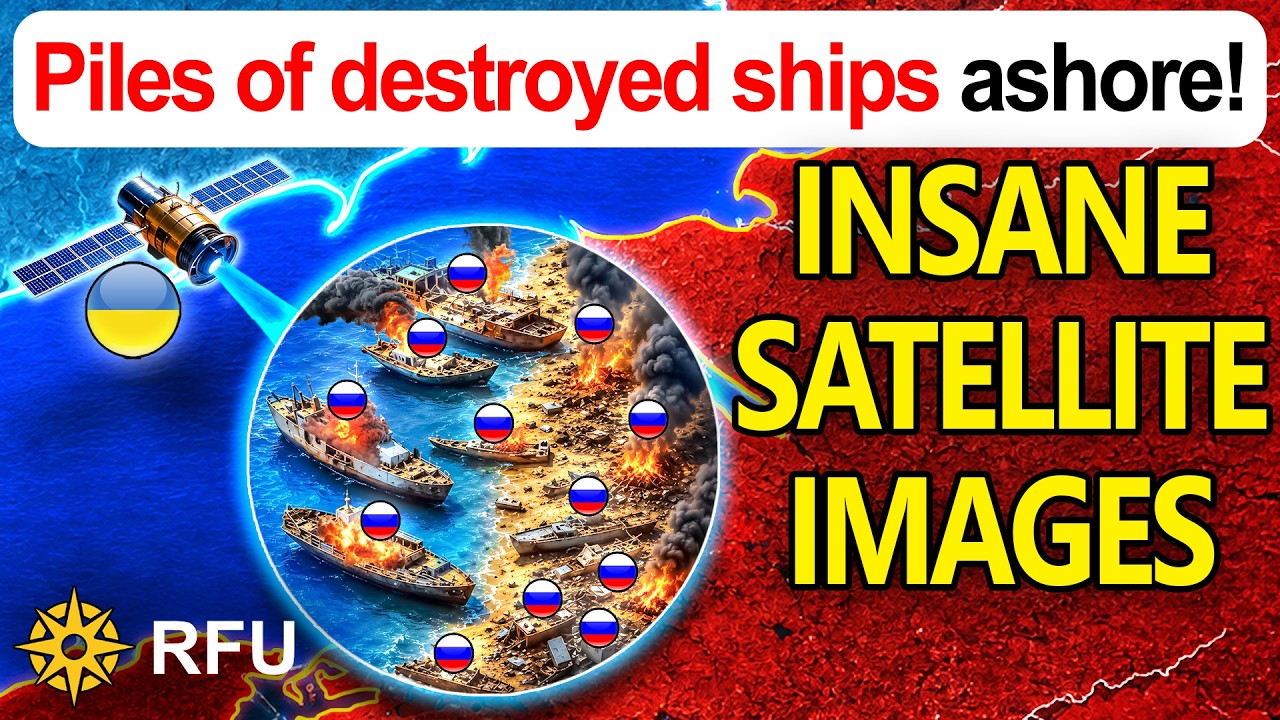
New satellite imagery from the Russian port of Azov shows damaged Russian tankers and cargo vessels gathered along the shoreline. After being destroyed in the massive Ukrainian strike campaign to cut off Crimea from the sea, many were towed back into ports, with Russian hoping they could still be repaired. In practice however, Russian crews are effectively dragging maritime corpses back to shore, only to send out more vessels along the same routes, and into the Ukrainian killing fields in the sea of Azov. This has become Russia’s maritime version of its suicidal frontal assaults on land, with fresh vessels sent forward while damaged and crippled ships from failed past blockade runs are dragged back to port.
The strike footage explains why the port is filling, as Ukrainian forces reported hitting over one-hundred and seventy-nine Russian vessels in only two weeks. Ukrainian footage shows drones moving from one Russian vessel to the next, clearly showing how quickly the attacks accumulate. Separate footage shows one ship burning in the Sea of Azov and another still flying the Russian flag after being struck. The Babylon cargo ship provides the clearest close view, with the remains of an exploded drone lodged in its side and fire damage or another impact visible inside. The pace of losses is not slowing down, with Russians losing almost the same number of ships every day, meaning that many more will soon be promoted to submarine. At this point, every Russian ship entering these waters follows scores of others that had already been hit, yet Moscow kept sending in the next.
Recent upgrades to the FP one and FP two drones are one of several improvements increasing the effectiveness of Ukrainian strikes against Russian vessels. Both models have received terminal guidance and automatic target acquisition, allowing their onboard systems to identify a moving ship and correct the flight path during the final approach. Russians have been trying to counter the drones by mounting machine guns and electronic warfare emitters on vessels to shoot them down or sever the operator’s control signal. Once the target has been acquired, however, the drone can continue the attack autonomously even if that signal is lost. The operator brings the drone onto the vessel, and the onboard system then keeps the target centered through the final seconds of flight, raising the accuracy of the strike.
With Russians now actively dragging damaged ships back to port for repairs, Ukraine has begun striking the tugboats that are sent out. These tugboats move toward disabled tankers and cargo ships so they can be evacuated, however released footage shows that Ukrainian forces are now destroying between one and two of them each day. Without a tugboat, the original ship remains stranded, repairs cannot begin, and damage that might have been temporary becomes permanent. Russia must then send another recovery vessel into the same threatened waters, reproducing the suicide assault pattern at sea as one casualty pulls a second ship forward and risks turning the rescue mission into another loss.
This intense pressure has already reduced the ferry crossings over the Kerch strait by a reported seventy five percent, leaving some vessels out of service and others only able to move if they are dragged back and forth by the tugboats.
Overall, Russia now faces a choice between reducing maritime traffic and continuing to feed more vessels into a campaign that has already made losses routine. Even when no ship is hit, tighter sailing schedules and heavier protection will reduce how much cargo can pass through the Sea of Azov. As the number of usable ships falls, ports will spend more time handling damaged vessels and less time moving cargo. Ukraine can therefore keep cutting Russian maritime capacity without sinking every target, because every damaged ship held in port is one less vessel available for the next voyage.
💎 Special Offer: starting from just $4.99! Get 50% OFF full access to the map + exclusive strategic updates: https://www.rfunews.com/pricing
In this video, we will analyze how false Russian claims ended in the biggest disaster of the year.
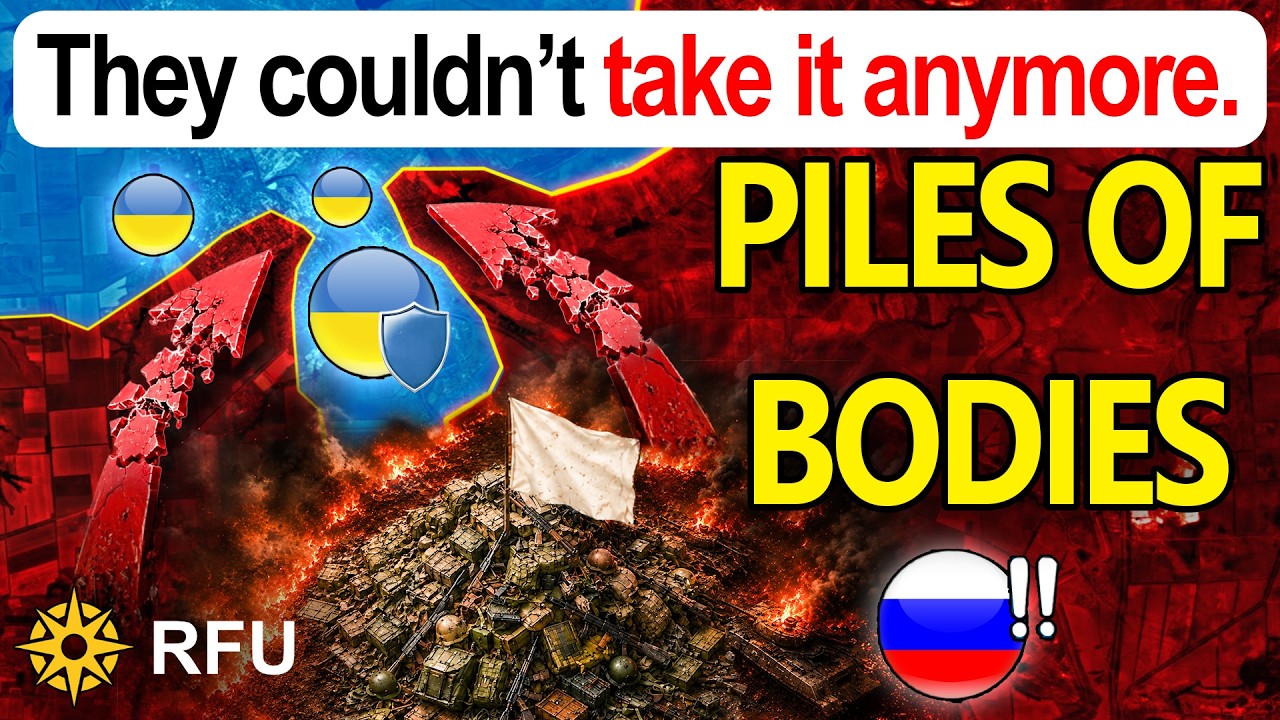
Here, Russia is claiming the city of Kostiantynivka has been captured, and the Ukrainian defense has been overrun. However, piles of Russian bodies and Russians begging Ukraine for a ceasefire suggest something else is happening, as Ukraine found a devastating way to answer Russian claims.
High-ranking Russian officials claimed up to ninety-six percent of Kostiantynivka is under Russian control, presenting staged flag-raising videos in the northern districts as proof that Ukrainian units holding the area have collapsed. Yet Ukrainian footage shows something completely different, as geolocated videos demonstrate Ukrainian troops operating across northern, central, and southern parts of the city, while active fighting continues throughout the town. Still, official Russian sources continue to insist that only isolated Ukrainian holdouts remain in basements and peripheral districts, with their clearance being only a matter of time. Despite these claims, even Russian military analysts now compare the announcement about Kostiantynivka capture to the fake capture claim of Kupiansk in November of last year. These doubts are confirmed by Russia’s own artillery footage showing active shelling of Ukrainian positions in areas that the Russian military claims is under full Russian control.
This goes further than just the public backlash from their own side, as in response to the Russian claims, Ukrainians massively intensified their shelling of Russian positions as punishment. Geolocated footage shows a Ukrainian Mig Twenty-nine is destroying a building used as a Russian drone base, while a Ukrainian Mirage Two-thousand struck a substation where Russian infantry was massing for further assaults. Ukrainian artillery has been continuously buildings used as infiltration hideouts, while heavy bomber drones, FPV, and reconnaissance drones monitor every approach and attack every movement.
As a result, Russia’s premature victory claim has made the disaster worse, as the Russian command was forced to sending new infiltrators forward in large numbers. Just like what happened around Kupiansk, Russian commanders now face immense pressure to make reality match their false symbolic claims, as soldiers are sent forward to hold on to the claim that the city is under Russian control. Instead, Ukrainian drones, artillery, and aircraft hunt them while they move between ruins, attempt to reinforce positions, or wait for orders.
The clearest evidence about how things really are on the ground comes from the Russians themselves, as footage filmed by a Russian assault soldier shows him moving along what has effectively become a path of death. Dozens of Russian bodies lie within meters of each other, piled along both sides of the route into Kostiantynivka. The approaches and the streets are becoming a graveyard in which the infiltrating Russians have nowhere to hide from the Ukrainian drone strikes.
The losses have become so severe that the Russian Defense Ministry has now begged Ukraine to halt its shelling of the city. Russians claim they want to stop Ukrainians shooting, so that they can supposedly evacuate civilians and recover bodies. However, the real reason is that a ceasefire would silence precisely the Ukrainian strike-and-search system that prevents Russia from gaining control of Kostiantynivka. The humanitarian pretext is an excuse to indirectly beg Ukrainians to stop shooting at their overwhelmed soldiers, as such significant losses are causing footholds to slip out of their control.
This is particularly distrustful, as Russia did not demand a ceasefire while its bombs and drones were destroying Kostiantynivka as the siege began. It was Ukraine that conducted the civilian evacuations, dedicating sparse armored vehicles under great risk to move residents out of the town. It was Ukrainian soldiers who had to clear Russian drones laying in ambush on the evacuation roads out of Kostiantynivka, while Russian operators attacked any movement regardless of whether vehicles carried soldiers or civilians. Only when Russian bodies began piling up did their commanders begin begging Ukraine for a pause to the fighting.
Overall, the Russian capture claim serves a political purpose, strengthening Russia’s position before the world audience. But the Russian command has repeatedly shown that after announcing imaginary victories, it will sacrifice thousands of soldiers trying to make them real, and Kostiantynivka is becoming the next example. Russia declared victory, intensified infiltrations, and watched its troops die faster, then effectively started asking Ukraine to stop firing long enough for them to advance...
💎 Help us expand the coverage! Subscription starts from just $4.99! Get 50% OFF full access to the map + exclusive strategic updates: https://www.rfunews.com/pricing
Today, there are important updates from the Russian Federation.
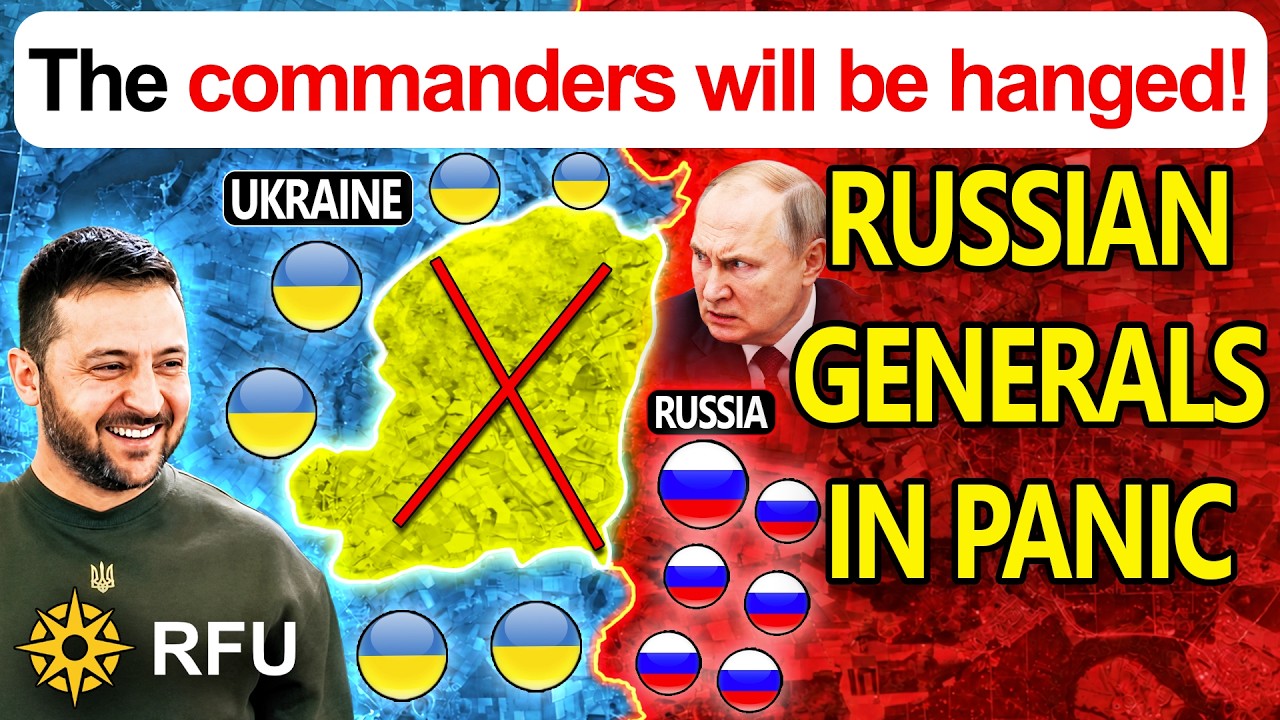
Russian military channels are reacting with anger to the Russian retreat around Liman, where Ukrainian counterattacks have erased Russian gains west of the Zherebets River. Kremlin-affiliated commentators acknowledge in panic the Ukrainian initiative around the sector while criticizing exaggerated Russian reporting, demanding that Russian commanders be hanged. The embarrassment became particularly visible at Sviatohirsk, claimed captured by Putin, based on AI-fabricated videos of Russian soldiers inside the town, only for the Third Army Corps commander Andriy Biletskyi to subsequently film himself walking there openly, demonstrating continued Ukrainian control and the relative safety inside that allowed him not to wear a helmet. For Russian analysts, the deeper problem is that fabricated victories eventually corrupt battlefield decision-making. Once one Russian commander reports an imaginary advance, neighboring units and higher headquarters begin planning around territory that Russia does not actually control. A Russian analyst explicitly warned that falsely declaring settlements captured can prevent Russian forces from striking them because headquarters believes friendly troops are present there, which gives the Ukrainians more freedom to operate.
The consequences multiply, as artillery may withhold fire from Ukrainian positions incorrectly marked as Russian. Reinforcements can be ordered toward supposedly friendly strongpoints only to encounter Ukrainian ambushes. Supply vehicles can follow routes assumed to be secured but actually covered by Ukrainian drones. Russian assault groups can also receive objectives based on imaginary starting lines, while reserves are committed to rescuing positions that were never held. Eventually, commanders must conduct emergency crisis management, consuming several times the manpower that an accurate assessment might have required.
Russian commentators therefore increasingly demand punishment and accountability for officers responsible for these beautiful fake reports that make their way up to the Kremlin. The Sviatohirsk episode made the absurdity especially obvious and catalyzed Russian discontent, as the fabricated footage purporting to demonstrate Russian presence was torn to pieces by Biletsky’s appearance.
The pattern resembles earlier Russian information failures around Kupiansk, when Russian sources repeatedly presented infiltrations and flag-raising footage as evidence of much deeper control, including material that analysts assessed as AI-generated. Yet Ukrainian clearing operations continued, contradicting the picture of secure Russian control. Similar paradoxes have appeared in the Dnipropetrovsk Region, as Ukrainian counteroffensives during the previous months reversed significant Russian gains, while geolocated evidence showed Ukrainian troops operating where Russian sources had previously claimed advances. Around Stepnohirsk in Zaporizhzhia, a Kremlin-affiliated military analyst admitted that false reporting had actually prevented Russian forces from properly establishing logistics and clearing territory they supposedly controlled. Ukrainian forces subsequently continued contesting positions around the area.
This is why Liman potentially represents something larger than another tactical setback. Russia’s leadership has placed enormous pressure on commanders to demonstrate constant progress. Putin continues publicly portraying Russia as winning, even as independent battlefield assessments show much slower advances and repeated Ukrainian counterattacks and successes. When genuine Russian advances become increasingly expensive, producing impressive reports is easier than producing territorial gains. But once AI-generated videos, manipulated flag-raisings, and fictitious captures enter the operational reporting chain, propaganda begins damaging the army producing it.
Overall, the Russian retreat from Liman and the claimed capture of Sviatohirsk that never materialized are the latest examples of how political leaders can announce victories, headquarters can draw optimistic maps, and commanders can report settlements captured, but Ukrainian soldiers remain there. The resulting outrage among Russian military commentators reflects recognition that somebody must eventually pay for the fiction. When reality finally catches up with the reports, Russian commanders rarely admit that previous victories never happened, as they fear paying the price with their heads, so they sacrifice additional soldiers, trying desperately to make the false map real.

🔴 Our interactive news map: https://www.rfunews.com/map
🔴 Subscribe to unlock full access to the map + exclusive strategic insights: https://www.rfunews.com/pricing
Today, the biggest news comes from the Russian Federation.
Here, Ukrainian strikes have forced Russia’s major oil refineries to shut down, bringing fuel production to a halt and pushed the Kremlin to urgently stop all fuel exports. This marks a mission accomplished moment in Ukraine’s refinery campaign, as the effects of those strikes are now crippling the wider Russian fuel system.
Several of Russia’s major oil refineries in central regions have now halted operations or sharply cut output after recent successful Ukrainian attacks on critical processing infrastructure. These are key plants that turn crude oil into gasoline, diesel, and aviation fuel, so once they stop, Russia loses fuel output at the source. Several major refineries were knocked offline within the same stretch of attacks, leaving the rest of the network with less room to cover the missing output.
Production wise, the effect is now visible across a large share of Russia’s refining system. Ryazan alone lost roughly ninety to one hundred percent of its processing capacity after the May fifteenth strike, while the latest damage at Yaroslavl was estimated to affect units covering about eighty to one hundred percent of plant processing volume. Perm was also forced into a full halt after three primary crude processing units were emergency stopped. Once losses of that scale appear across several major refineries at the same time, Russia is no longer dealing with isolated damage, but with a major reduction in the refining capacity still available to balance fuel supply.
With refining output falling across the system, the pressure soon moved into exports and forced Moscow into a longer term tradeoff. Russia imposed its gasoline export ban on April first and will continue to keep it in place till the end of July, so the restrictions had already been running for nearly two months when the latest refinery losses hit. With the gasoline ban in place in April, Russian oil product exports fell by about three hundred forty thousand barrels per day from March to two point two million barrels per day
Ukraine achieved this through a sustained strike campaign against the refinery units that matter most for fuel production. In the first twenty days of May alone, ten major Russian oil sites were hit, and six were forced to halt operations. The campaign became effective because Ukraine kept returning to damaged facilities before repairs could restore output, while also striking the processing sections Russia finds hardest to replace quickly. Perm shows this clearly, because the refinery had already been hit five times by May eighth, including three strikes in one week, before another attack followed on May twelfth that put the refinery out of action. That sequence prevented repairs from stabilizing the site and eventually put a halt to fuel processing. The same method appeared in Yaroslavl and Ryazan, where repeated strikes deepened earlier damage instead of allowing recovery. Yaroslavl was hit three times in May, while Ryazan was struck on May fifteenth in one of the most damaging attacks of the campaign. Kstovo and Syzran were also hit again, adding fresh disruption at major processing sites in Nizhny Novgorod and Samara regions. Kirishi, Primorsk, and several pumping stations were struck as well, which reduced the oil flow reaching the refineries that were still operating. That left the remaining plants processing less crude oil while covering more of the system’s needs, which made delays and bottlenecks harder to avoid.
Overall, Ukraine’s refinery campaign is now forcing Russia to spend more resources protecting fuel infrastructure and restoring damaged plants far behind the front. This pulls air defenses and repair capacity into the energy sector, where repeated strikes keep undoing earlier recovery work and slowing stabilization. As refinery outages continue, fuel distribution becomes harder to manage, increasing pressure on military supply planning across the war effort. Russia now faces a deeper logistical vulnerability inside its own rear, because every new disruption widens the gap between fuel demand and refining capacity.

🔴 Our interactive news map: https://www.rfunews.com/map
🔴 Subscribe to unlock full access to the map + exclusive strategic insights: https://www.rfunews.com/pricing

🔴 YOU ARE MISSING HALF OF OUR VIDEOS! Subscribe to unlock all out reports and support our work: https://www.youtube.com/channe....l/UCcNB1tZYpeDetqCad
Today, there are important updates from the Liman direction.
Here, Ukrainian forces have finally managed to cut off the Russian salient west of the Zherbets River by advancing from two sides. As a result, Russian forces are now pinned down in an area without being able to move in reinforcements or evacuate to the east.
Ukrainian counterattacks against both flanks of the Russian salient have narrowed the corridor connecting the Russian spearhead with its rear, leaving it dangerously exposed. Satellite imagery indicates Russian forces are already withdrawing from parts of the western salient around Shandryholove, as elements of Russia’s Second and One-Hundred-Forty-Fourth Motor Rifle Divisions now face a difficult choice: retreat east with limited chance of success or risk losing additional forces as Ukraine tightens its pressure.
The northern flank has deteriorated particularly rapidly, as Ukrainian units have gradually consolidated strongpoints between Nove and Katerynivka. Recent assaults expanded this foothold, with subsequent Russian strike footage itself indicating Ukrainian activity in areas previously under enemy control. Ukraine’s Third Corps then pushed south toward Kolodiazi, and Ukrainian troops captured an important tactical strongpoint in the forest belt north of the settlement, opening approaches toward northwestern Kolodiazi and western Ivanivka. Crucially, this advance allowed Ukrainian forces to cut the Kolodiazi-Ivanivka road completely, while simultaneously Russian forces inside Kolodiazi came under pressure from the south, creating multi-vector threats against the Russian bridgehead.
The southern flank, where Kolodiazi is located, is collapsing under similar pressure, as Ukrainian units counterattacked north of Stavky, and even Russian sources have acknowledged the increasingly dangerous situation, complaining that the entire bridgehead west of the Zherebets has become extremely difficult to sustain and is effectively cut off from the Russian mainland.
As a result, Ukraine has effectively cut the area around Shandryholove off from reliable logistical support. In an attempt to relieve the situation, Russian forces continue striking Ukrainian supply routes, but artillery and drones cannot solve Russia’s fundamental problem: its forward troops need ammunition, food, reinforcements, and casualty evacuation routes of their own.
Footage from the area illustrates what Russian logistics now face, as Russian soldiers attempting to recover wounded troops and bodies must travel along a route repeatedly targeted by Ukrainian drones. What should be a supply road has effectively become a road of death, as everyone moving toward the salient risks detection and destruction, making reinforcement increasingly expensive and evacuation equally dangerous.
However, Ukraine faces its own danger, as the advances forming the pincer are relatively narrow, meaning commanders cannot simply race forward chasing retreating Russians. Narrow penetrations can themselves become vulnerable to counterattacks against their flanks. Ukrainian forces therefore need to widen their gains, consolidate captured strongpoints, and establish secure logistics before attempting deeper exploitation or starting to systematically eliminate isolated Russian groups in the cut-off western part of the salient.
Overall, after Russia consequently risked watching its most important breakthrough in this sector dissolve, Ukrainian pressure from two sides has transformed the Russian offensive spearhead into a liability that is about to turn catastrophic. Eliminating that salient would push Russian forces back toward the river and destroy months of accumulated progress. However, this development also has strategic importance for Liman itself, because if Ukraine consolidates these gains, Russia’s northern pincer to encircle the city will effectively be broken, freeing Ukrainian resources to reinforce the city and concentrate increasingly on pushing back the Russian pincer approaching from the south.

💎 Help us expand the coverage! Subscription starts from just $4.99! Get 50% OFF full access to the map + exclusive strategic updates: https://www.rfunews.com/pricing
Today, the biggest news comes from the Sumy direction.
Here, Ukrainian forces are mounting counterattacks eastward after crossing the river. After fierce fighting in this sector, Ukrainian soldiers reentered the village of Kindrativka and pushed toward the rear of Andriivka, aiming to encircle the small settlement, while also retaking a series of treelines inside the village. This came days after Russian infiltrators were expelled from the forested area around Korchakivka. Here, the Russians managed to infiltrate the forest and take up positions there, which allowed them to accumulate and push westward.
However, the scale of Ukraine’s counterattack became visible after these Ukrainian clearing operations inside the forest. Notably, the Ukrainian advance didn’t stop, and further east they managed to fully clear the Russian presence in Marine, which the Russians had managed to infiltrate and gain a foothold in. Recapturing this village allowed the Ukrainians to push towards the village of Yunakivka, where they entrenched themselves in the southern part. As a result, they effectively created a bridgehead for further operations while improving their tactical positions along the frontline in the Sumy direction. After this successful series of counterattacks, Ukrainian special forces of the one hundred and fortieth Special Operations Battalion operating in this sector released footage of their clearing operations. They wore ghillie suits and used the thick vegetation in the forest to conceal their movement during the raid to get as close as possible to the Russian positions without being detected by reconnaissance drones. After they managed to close in on the Russian dugout undetected, a fierce firefight erupted between the Ukrainian operators and the Russian soldiers. The Ukrainians quickly suppressed the Russians with small arms fire, while tactically manoeuvring around them to encircle them while the Russians were pinned down. During this exchange of fire, one Russian soldier was killed, which prompted the Ukrainians to offer the remaining enemy soldier the chance to surrender. Heavily outgunned, the Russian soldier gave up, which allowed the Ukrainian operators to search the dugout and capture a phone, which can be used to extract valuable intelligence.
These Ukrainian counterattacks matter because, if they push the Russians back in the Sumy region, they could threaten a second Kursk offensive. Even the possibility of this happening again is critical for the Russians because, during the first Kursk offensive, Ukraine captured more than a thousand square kilometers of Russian territory, proving Russia is not as invincible as it portrays itself. Ukraine’s recent Vivaldi Operation in the Lyman sector also proved that carefully planned and executed counterattacks can catch the Russians off guard and roll back their advances significantly. Because of this, Russia might send reinforcements from more important sectors, such as Donbas, to reinforce the less vital sector of Sumy in order to try to halt the Ukrainian advances. This would further weaken their offensive potential and reduce their reserves, when their rate of advance has already dropped significantly compared to last year.
Overall, the real danger for Russia is that Ukraine is beginning to turn local counterattacks into a wider problem for the entire Sumy front. If Ukrainian forces keep forcing Russian units out of exposed positions, Moscow may have to spend valuable reserves simply to prevent a larger breakthrough from developing. That would create a difficult choice for Russia to either reinforce Sumy and weaken more important fronts, or accept the risk of another Ukrainian operation deep inside Russian territory. Ukraine does not need to recapture huge amounts of territory here to achieve a major effect because the threat of a breakthrough alone could force Russia to stretch its already limited manpower and reserves even further.

💎 Special Offer: starting from just $4.99! Get 50% OFF full access to the map + exclusive strategic updates: https://www.rfunews.com/pricing
Russians have now officially started to dismantle their own air defense, leaving even more gaps for Ukraine to exploit. All of this was done solely to increase the number of strikes on Ukraine, as Russia has begun converting its existing air defense missiles into ground-attack ballistic missiles. According to Ukrainian intelligence, Russia converted around two-hundred missiles in two-thousand-and-twenty-five and plans to convert an additional four-hundred-and-eighty by the end of this year. However, as these missiles were never designed for such ground-attack purposes, their accuracy is horribly ineffective. Additionally, using air defense interceptors as strike weapons creates a serious long-term vulnerability for Russian air defense as a whole, as production capabilities is refocused and repurposed, while Russians already suffer from a serious air defense problem.
Russian air defenses are already placed under significant strain, with Russian military analysts stating that Russia is experiencing a true air defense shortage. Ukrainian saturation tactics using waves of drones and missiles force Russian systems to already expend valuable interceptors, with some units already reporting a shortage. Instead of addressing this shortage, the Russian leadership has decided to prioritize offensive strikes against Ukraine. This decision may exploit Ukraine’s own shortage of ballistic missile interceptors, but it leaves Russia with a thinner and less capable defensive shield of its own, while Ukraine works to strengthen theirs instead. Despite this obvious misalignment of priorities, Russia is now focusing massively on launching as many of them as possible to strike targets across Kyiv.
The latest Russian strike involved twenty-four ballistic missiles, four Zircon missiles, and more than one hundred drones. Russians deployed ballistic missiles with cluster warheads to target warehouses within the city. As a result of the attacks, seventeen people were killed, more than forty were injured, and fire raging for hours.
Simultaneously, Russia is importing additional offensive capacity while prioritizing missiles that weaken or fail to replenish its homeland defense. A North Korean missile unit has recently been deployed to the Voronezh region to support missile strikes against Ukraine. The contingent includes approximately six individual ballistic missile launchers and more than one-hundred-and-twenty ballistic missiles. These North Korean missiles and launchers will soon enable Russia to conduct even larger salvos and more frequent attacks on Ukraine, putting Ukraine’s air defense network under increasing strain.
However, destroying the launchers before firing may be more realistic than attempting to intercept every missile after launch. Ukrainian Foreign Minister Andrii Sybiha has declared that North Korean missile installations or systems deployed to attack Ukraine are legitimate military targets. President Volodymyr Zelensky has additionally made a decree to prioritize the destruction of Russian ballistic missile launchers to reduce the number of strikes against Ukraine. Zelensky stressed that Ukrainian forces already know how to track the locations of the launchers with the help of Western intelligence support. At the same time, Ukraine is working together with European partners to produce an anti-ballistic missile air-defense system as a long-term solution. The interceptor missiles of the Freya system will be manufactured domestically by Fire Point, while its radar and sensors would be supplied by Europe. This would help to reduce Ukraine’s dependence on the US-made Patriot system with a domestic alternative. If this new air defense system is successfully developed and mass-produced, while Ukraine strikes Russia’s launchers, Ukraine could significantly reduce the number of successful ballistic missile strikes. Moscow is now exploiting Ukraine’s temporary shortage, but it is encouraging Ukraine to destroy Russian launchers and accelerate a European replacement for Patriot.
Overall, diverting air defense interceptors into ground-attack missiles is Russia’s biggest mistake, because they are trading long-term homeland protection for short-term strike capacity against Ukraine. Every gap in Russian protection, which they voluntarily make, creates additional opportunities for Ukraine, which they can exploit. Additionally, importing North Korean missiles increases short-term attack volume but does nothing to repair the growing defensive vulnerability inside Russia. Russia is trying to exploit Ukraine’s temporary shortage by creating a potentially longer-term shortage in its own defensive system.
💎 Special Offer: starting from just $4.99! Get 50% OFF full access to the map + exclusive strategic updates: https://www.rfunews.com/pricing
In this video, we will analyze why Russia is preparing to see the frontlines in Crimea.
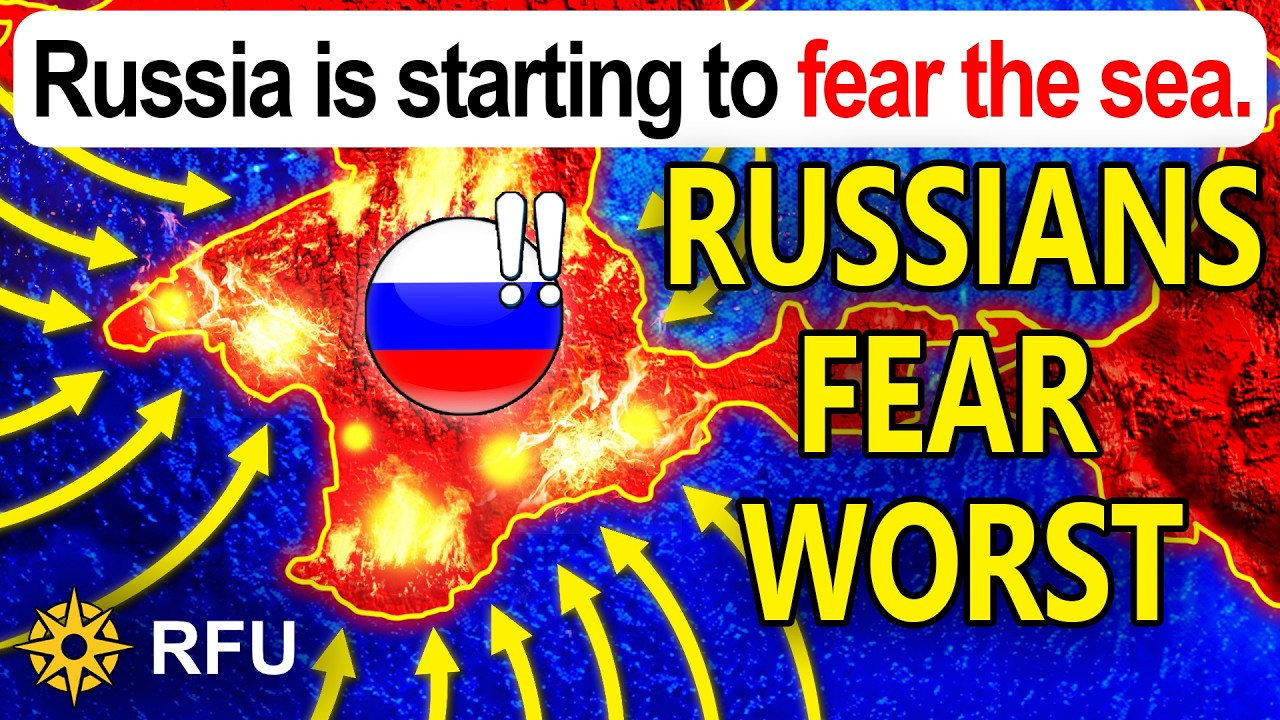
Here, the situation became so dire for the Russians that they started to fear a full-scale attack from the Black Sea. Now, they are digging in and preparing for the worst as the peninsula grows more exposed by the day.
Recently, Russia has become alarmed about Crimea and started the construction of a Black Sea wall to defend the peninsula against a Ukrainian attack from the Black Sea. Notably, Russian forces installed dragon’s teeth on beaches along the coastline, turning coastal areas into fortified zones. The reinforced concrete anti-tank obstacles were placed directly on the beach to impede the movement of tanks and mechanized infantry. The construction proves that Russia feels the urgency to build new fortifications before Ukraine exploits the situation.
In the short term, these defenses were designed to counter Ukrainian raids and special forces incursions, an understandable concern given that such operations have already occurred repeatedly. However, the newly built dragon’s teeth fortifications are largely ineffective against this type of threat.
Ukrainian special forces raids in Crimea are typically fast, small-scale, and multi-domain, combining maritime insertion, reconnaissance, sabotage, and rapid strike actions. Teams move covertly across the Black Sea, often switching to low-profile craft near the coast, and operate under the cover of darkness or poor weather. They are frequently supported by drones for surveillance and targeting, as well as intelligence from partisan networks. Once ashore, they aim to disable radar and electronic warfare systems, striking isolated assets or gathering intelligence before rapidly withdrawing. Crucially, these operations are defined by speed and dispersal, making static coastal barriers like dragon’s teeth largely irrelevant. Their limitations suggest that the deeper Russian concern driving these fortifications is not small raid prevention, but the possibility of larger maritime or combined-arms scenarios.
In the long term, these defenses are particularly effective against a bigger combined landing operation. These attacks from the sea would only complement the main attack from the north since Ukraine lacks the capabilities to land enough forces on Crimea and keep them supplied. It would require a sufficient number of landing ships, which Ukraine doesn’t have, and total dominance over the western part of the Black Sea, combined with air superiority. Although this scenario seems unlikely at first glance, Russia is actively preparing for it by installing anti-tank obstacles because the conditions around Crimea are worsening every day.
One of the reasons for Russia’s concern is that Russian advances along the front have stalled, while Ukrainian forces have recently begun making territorial gains across a broader section of the battlefield. At the same time, Ukraine's campaign of medium-range strikes against logistics infrastructure is becoming increasingly disruptive, steadily reducing the flow of fuel, ammunition, and other supplies into Crimea. Former Russian FSB officer and separatist commander Igor Girkin argued that Ukrainian drone strikes against transportation routes leading to Crimea resemble a classic battlefield-isolation strategy aimed at severing communications and supply lines deep behind the front. He warned that these attacks threaten logistics supporting Crimea, Russian forces along the lower Dnipro River, the Kinburn Spit, and coastal defense positions, adding that they could be preparing the conditions for a future Ukrainian offensive.
Overall, Russia’s newly built coastal fortifications in Crimea point to Russia’s perception of the peninsula’s strategic positions, which have been significantly weakened by Ukraine. As Russian forces face mounting attrition and supply shortages, the situation is likely to worsen further, forcing them to take defensive measures. The key implication is that Moscow is preparing for scenarios it believes it may not be able to reliably control or repel once they develop, which underlies uncertainty and fear.
💎 Help us expand the coverage! Subscription starts from just $4.99! Get 50% OFF full access to the map + exclusive strategic updates: https://www.rfunews.com/pricing
Today, there are dangerous updates from the Russian Federation.
Here, Russia is facing an extraordinary plague outbreak in Siberia after a young laboratory worker died from a mysterious, severe pneumonia, and nearly two hundred potential contacts were placed under medical observation. Daria Shipilova, twenty-eight years old, worked at the Irkutsk Anti-Plague Research Institute and deteriorated rapidly after falling ill. The whole hospital was quarantined, public events were canceled, and Russia’s top public-health official Anna Popova traveled thousands of kilometers from Moscow to coordinate the response. Yet Russian authorities insist the regional situation remains stable, and that is where Russia’s story becomes increasingly strange.
According to the officially reported version, the lab official accidentally broke a test tube containing live plague bacteria while working. But Russian epidemiologist Mikhail Favorov publicly questioned that explanation, arguing that specialists handling dangerous pathogens work in protective equipment and describing infection through such an accident as unlikely. He also argued that the immediate arrival of the highest-ranking health officials in Russia indicates authorities were treating the situation extremely seriously, despite trying to project calmness to the public.
Russian authorities subsequently contradicted themselves and their own official laboratory-accident story, as they changed their version and stated that the woman died from pneumonia of unknown etiology, that testing found no microorganisms connected to her work, and that an investigation discovered no laboratory emergency involving dangerous pathogens.
Yet the precautions have been extensive, as nearly two hundred contacts were identified, several medical facilities introduced quarantine measures, preventive restrictions appeared elsewhere, and authorities launched an investigation. Meanwhile, officials initially avoided publicly identifying the suspected disease. One of the local leaders, Alexei Tsydenov, initially wrote that the woman had died from plague before subsequently modifying the statement to say she possibly had.
That combination has inevitably produced accusations of a cover-up, with the discrepancy obvious, as Moscow publicly minimizes the danger while simultaneously implementing measures appropriate for a potentially serious infectious incident.
The Kremlin has powerful reasons to prevent panic, as a genuine outbreak spreading beyond isolated contacts could force quarantines of whole towns, disrupt transportation and industrial production, consume medical resources, and create serious public anxiety at a time when Russian society is already on high alert as it feels the economic consequences of Putin’s campaign in Ukraine.
These consequences can become even more dangerous, as the Russian war machine depends upon enormous logistical networks moving soldiers, equipment, and ammunition across the country. A major infectious outbreak affecting transportation hubs, military facilities, or mobilization centers could interfere with troop rotations and training. Quarantines could remove personnel from duty, while outbreaks among tightly concentrated soldiers could temporarily disable entire formations, ending Putin’s war earlier than expected, as large-scale health restrictions would create another demand on government finances and manpower precisely when Moscow needs both elsewhere.
Overall, for the Russian government, controlling information may therefore become almost as important as controlling the medical situation. Russia has a long history of secrecy surrounding major disasters, from the nuclear power plant disaster in Chornobyl during the Soviet Union to the Kursk submarine sinking catastrophe, which Putin tried to hide at the beginning of his reign twenty-six years ago. Whether the event in Irkutsk ultimately proves to be a plague outbreak, another more common infection, or an isolated laboratory incident without major consequences, the conflicting explanations have already created precisely what the Kremlin would want to avoid: suspicion that the official story is concealing something considerably more serious. Something that could be the final nail in the coffin not only for Putin’s war against Ukraine but also for his regime.
💎 Help us expand the coverage! Subscription starts from just $4.99! Get 50% OFF full access to the map + exclusive strategic updates: https://www.rfunews.com/pricing
Today, there are important updates from the Liman direction.
Here, the gap between Russian official maps and battlefield reality around Liman has become extraordinary, as Russian command maps place their furthest claimed positions roughly forty kilometers west of the actual frontline and attribute another one-thousand-three-hundred-and-sixty square kilometers to Russian control. Such claims are based on an apparently AI-generated video purporting to show a Russian soldier in Chervonyi Oskil, after which Russian sources claimed the settlement had been captured, causing reaction from Russian military analysts, who are increasingly criticizing this trend of exaggerated reporting.
That fictional picture has become increasingly difficult to preserve as Ukraine’s Operation Vivaldi advances. To counter this in the information space, Russia’s Western Grouping of Forces released footage supposedly demonstrating continued Russian presence in Nove, Ridkodub, and other recently liberated settlements by the Ukrainians. But analysts quickly identified indications that the footage was archival, with the videos filmed when Russian forces originally captured these locations in two-thousand-twenty-five, before Ukraine’s counterattack, showing vegetation inconsistent with current conditions. Another clip from Ridkodub showed a Russian soldier moving through the settlement while Ukrainian FPV drones pursued him, but visual comparisons placed the recording around August last year.
Russian military commentators have consequently begun attacking their own command’s response with the argument that the Ukrainian counterattack itself is less damaging than pretending it does not exist. Instead of acknowledging setbacks, determining why defenses failed and correcting them, Russian commanders publish old footage and maintain an increasingly fictional frontline, which creates consequences extending far beyond symbolic claims.
Russian soldiers witnessing Ukrainian advances while official channels insist nothing significant has happened have less reason to trust their commanders. Russian analysts have repeatedly warned that distorted reporting also damages battlefield decision-making: commanders can allocate reserves, artillery and drone coverage according to positions that exist on maps but not on the ground. The resulting disconnect can leave troops isolated and encourage demoralized soldiers to seek information elsewhere.
The real battlefield situation around Liman demonstrates why this matters, as Ukraine officially announced that its Third Army Corps has liberated settlement after settlement, releasing footage weeks after the events for operational security. The earlier penetration around Nove was particularly revealing, as the Ukrainian forces converted an old BTR into an unmanned explosive vehicle and managed to drive the relatively slow machine toward Russian defenses. Its ability to approach the target suggested Russian drone observation and fire control were not present there, because according to Russian maps, there was no threat to Ridkodub.
Now Ukrainian pressure is extending toward the Zherebets River. Russian sources themselves have acknowledged Ukrainian activity around crossings and positions near Terny, while Ukrainian strikes against crossing points and rear logistics are complicating Russian resupply. Every restricted crossing creates another bottleneck where vehicles, ammunition and reinforcements become vulnerable to drones.
Yet Russian information management continues trying to preserve a battlefield picture increasingly contradicted even by Russian analysts. After losing substantial territory and suffering significant casualties, commanders are still releasing archival or AI-generated footage and defending claims built upon earlier exaggerated advances.
Overall, Russia may claim that the Lyman front has stabilized, but fighting remains active around the Zherebets approaches, with Ukrainian infiltrators crossing the river for quick raids. Ukraine is simultaneously applying ground pressure, attacking the crossings methodically and disrupting Russian rear logistics. The widening distance between Russia’s declared frontline and the battlefield itself is therefore becoming more than an information problem: it risks actively undermining Russia’s ability to organize the defense it now urgently needs to stop Ukraine’s counteroffensive and to prevent the Russian defense line behind the river from collapsing completely.
💎 Special Offer: starting from just $4.99! Get 50% OFF full access to the map + exclusive strategic updates: https://www.rfunews.com/pricing
In this video, we will analyze how Russia’s decision to shift responsibility for defense backfired.
Here, unable to defend their own sky, the Russian authorities have told private companies to fend for themselves and protect their own facilities from Ukrainian strikes instead. However, the flawed nature of the plan and the organizational limitations have led to a complete defense failure, with cities burning.
The new policy immediately exposes several major weaknesses, as modern air defense depends on integrated command networks for rapid decision-making and coordinated engagement procedures by trained operators. Large corporations may have the money to buy equipment, but they generally lack the expertise necessary to operate military-grade systems effectively. More importantly, creating dozens or hundreds of separate defensive networks risks producing fragmented coverage across Russia. Wealthier companies may indeed succeed in protecting themselves, while less profitable facilities will remain exposed. Rather than strengthening national air defense, the policy risks creating a patchwork system full of exploitable gaps.
Officially, the measure of the Russian government was intended to increase the number of mobile air-defense groups and strengthen protection of strategic infrastructure. The idea was to allow private companies to purchase anti-aircraft artillery systems, radars, electronic-warfare equipment, and interceptor systems themselves. Unofficially, it reflects the much harsher reality in which the Russian military can no longer adequately defend the growing number of targets threatened by Ukrainian long-range drones.
However, due to the Russian officials fearing any future unrest, any military equipment used in this manner will not formally belong to the companies themselves. Instead, it will remain under military control and be operated through reservist formations attached to regional defense units.
The flaws in the plan became particularly visible during Ukraine's massive drone assault on Moscow, when waves of long-range drones penetrated even the heavily defended airspace around the capital. Russian authorities claimed hundreds of drones were intercepted, yet multiple still reached their targets. The Gazprom Neft refinery in Kapotnya, targeted already just days before, is the most important fuel-producing facility serving the Moscow region, supplying half of the capital's fuel consumption.
Videos recorded by residents showed drones flying at low altitude over Moscow before powerful explosions erupted around the refinery. Witnesses captured enormous fires, thick columns of black smoke, and huge secondary explosions, forcing temporary airport closures and damaging nearby infrastructure.
The attack highlighted how, when air defenses become saturated by large drone swarms and are used by inexperienced operators, mistakes become more likely. Failed interceptions, mistimed engagements, and falling debris caused damage of their own in Moscow. Defensive systems attempting to destroy incoming drones created additional hazards for the very infrastructure they are meant to protect, as clearly visible in the last attack when an air defense rocket hit a large oil storage tank and blew up its roof into the air.
What makes this development especially interesting is that Russia appears to be adapting a concept Ukraine introduced at the end of two thousand twenty five, when Ukrainian authorities authorized enterprises and licensed security organizations to participate in air defense. Companies were allowed to purchase remotely operated weapon stations, interceptor systems, and supporting equipment while integrating directly into a centralized Air Force command structure. By May this year, dozens of Ukrainian companies had reportedly joined the program, contributing to successful interceptions of eight five percent of Russian drones they targeted.
However, the crucial difference lies in implementation, as Ukraine grants participants meaningful operational flexibility while maintaining centralized coordination. Russia, by contrast, remains reluctant to provide private organizations with real control, with the hesitation stemming largely from political concerns and fear of mutiny. The stigma of providing companies and oligarchs with military-grade weapons is a heavy one in Russia, the last time this happened, a fifty-thousand strong Wagner army marched on Moscow. As a result, the Kremlin seeks additional defensive capacity while simultaneously ensuring that private entities never possess real independent military power capable of rivalling state control.
