News & Politics

The Lindsay Clancy murder trial has entered the verdict watch phase. Jurors have not reached a verdict in the Clancy trial. If Clancy is convicted she could face life in prison. If she is found not guilty, she may be released or remain in a mental health facility.
Subscribe to LiveNOW from FOX! https://www.youtube.com/liveno....wfox?sub_confirmatio
Where to watch LiveNOW from FOX: https://www.livenowfox.com
Follow us @LiveNOWFOX on TikTok: https://www.tiktok.com/@livenowfox
Raw and unfiltered. Watch a non-stop stream of breaking news, live events and stories across the nation. Limited commentary. No opinion. Experience LiveNOW from FOX. Live news streaming channel when and where you need it.

We are now hearing reports that emergency crews rushed to Six Flags Over Georgia on Monday afternoon after an incident on the Goliath roller coaster left one person dead and several others injured. Officers assigned to Six Flags Over Georgia responded to an emergency call at approximately 3:58 p.m. on Monday. According to our partners at FOX 5 Atlanta, Cobb County police said that several people reported injuries and one person died during the incident involving a roller coaster.
Subscribe to LiveNOW from FOX! https://www.youtube.com/liveno....wfox?sub_confirmatio
Where to watch LiveNOW from FOX: https://www.livenowfox.com
Follow us @LiveNOWFOX on TikTok: https://www.tiktok.com/@livenowfox
Raw and unfiltered. Watch a non-stop stream of breaking news, live events and stories across the nation. Limited commentary. No opinion. Experience LiveNOW from FOX. Live news streaming channel when and where you need it.

President Trump announced on Truth Social that Katie Zacharia will begin her term as the new White House Press Secretary on Tuesday. She is expected to hold her first press briefing at 9:30 am eastern time Tuesday.
"I am pleased to announce that Katie Zacharia will be beginning her term as Press Secretary tomorrow, Columbus Day, and will be doing an introductory News Conference on Tuesday at 9:30 A.M. from the Press Briefing Room in the White House. Katie has been with me, in spirit, from the very beginning, and will do a fantastic job!" said Trump.
Subscribe to LiveNOW from FOX! https://www.youtube.com/liveno....wfox?sub_confirmatio
Where to watch LiveNOW from FOX: https://www.livenowfox.com
Follow us @LiveNOWFOX on TikTok: https://www.tiktok.com/@livenowfox
Raw and unfiltered. Watch a non-stop stream of breaking news, live events and stories across the nation. Limited commentary. No opinion. Experience LiveNOW from FOX. Live news streaming channel when and where you need it.

Sean "Diddy" Combs was transported out of federal prison to a hospital over the weekend to receive treatment for a head injury.
Subscribe to LiveNOW from FOX! https://www.youtube.com/liveno....wfox?sub_confirmatio
Where to watch LiveNOW from FOX: https://www.livenowfox.com
Follow us @LiveNOWFOX on TikTok: https://www.tiktok.com/@livenowfox
Raw and unfiltered. Watch a non-stop stream of breaking news, live events and stories across the nation. Limited commentary. No opinion. Experience LiveNOW from FOX. Live news streaming channel when and where you need it.

Selma Blair arrested on flight, according to TMZ. Blair is accused of trying to open a plane door mid-air.

On Tuesday, federal authorities announced the arrest of a Saudi national and former OpenAI engineer who is accused of installing a concealed audio-recording device in an executive conference room at the artificial intelligence company, according to the U.S. Department of Justice.
LiveNOW’s Mike Pache speaks with FOX News’ Jonathan Hunt to discuss the latest developments.
Subscribe to LiveNOW from FOX! https://www.youtube.com/liveno....wfox?sub_confirmatio
Where to watch LiveNOW from FOX: https://www.livenowfox.com
Follow us @LiveNOWFOX on TikTok: https://www.tiktok.com/@livenowfox
Raw and unfiltered. Watch a non-stop stream of breaking news, live events and stories across the nation. Limited commentary. No opinion. Experience LiveNOW from FOX. Live news streaming channel when and where you need it.

Rep. Ilhan Omar's home was raided by DHS in fraud probe. HSI Agents are outside Rep. Omar's home at this time.
Subscribe to LiveNOW from FOX! https://www.youtube.com/liveno....wfox?sub_confirmatio
Where to watch LiveNOW from FOX: https://www.livenowfox.com
Follow us @LiveNOWFOX on TikTok: https://www.tiktok.com/@livenowfox
Raw and unfiltered. Watch a non-stop stream of breaking news, live events and stories across the nation. Limited commentary. No opinion. Experience LiveNOW from FOX. Live news streaming channel when and where you need it.
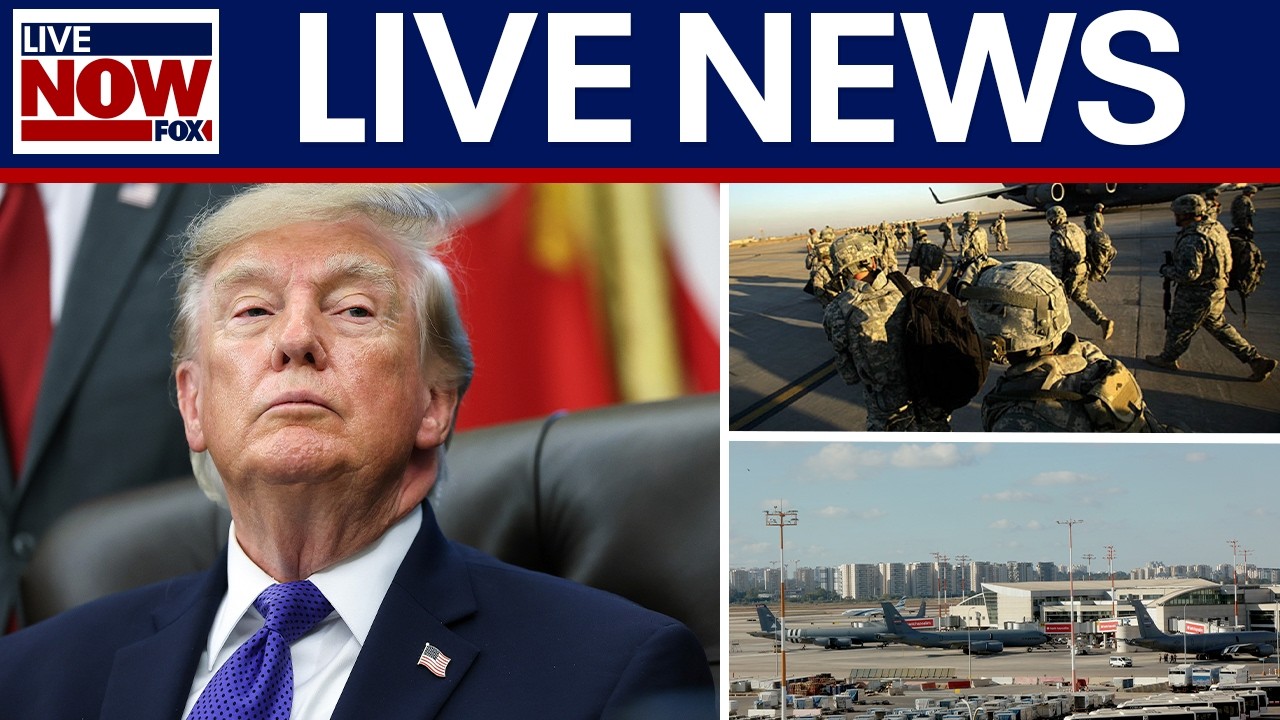
The U.S. military says all American troops have now left Iraq, officially ending a 12-year mission focused on fighting ISIS. The final U.S. forces departed the last air base in northern Iraq under an agreement between Washington and Baghdad. The withdrawal comes as the U.S.-Iran war continues, with fighting and tensions at times spilling over into Iraq.
A cockpit incident onboard an Israeli plane lead to a hijacking scare causing the plane to be diverted. Israeli Prime Minister Netanyahu's office says "The incident is under control, and all measures are currently being deployed in order to return the Israeli passengers safely to Israel."
Subscribe to LiveNOW from FOX! https://www.youtube.com/liveno....wfox?sub_confirmatio
Where to watch LiveNOW from FOX: https://www.livenowfox.com
Follow us @LiveNOWFOX on TikTok: https://www.tiktok.com/@livenowfox
Raw and unfiltered. Watch a non-stop stream of breaking news, live events and stories across the nation. Limited commentary. No opinion. Experience LiveNOW from FOX. Live news streaming channel when and where you need it.

💎 Special Offer: starting from just $4.99! Get 50% OFF full access to the map + exclusive strategic updates: https://www.rfunews.com/pricing
In this video, we will analyze Ukraine’s ultimatum to Belarus.
Here, Ukraine issued a stark warning to Belarus to stop supporting Russian long range drone attacks on Ukraine. What followed was absolute panic in Belarus, prompting Lukashenko to start asking for forgiveness as the deadline set by Ukraine approaches quickly.
Recently, Zelensky issued an ultimatum to Belarus, stating that relay stations in two Belarusian regions bordering Ukraine are helping Russian forces adjust strikes against Ukrainian civilian infrastructure. This equipment has enabled attacks on Ukraine’s energy sector, railways, and cities. He warned Minsk 5 days ago that the relays must be shut down or removed within a week, otherwise Ukraine would take action itself.
This ultimatum comes as Russia continues to expand its military infrastructure inside Belarus. Preparations for a relay network and drone control points began as early as March, with Russian forces developing a growing network of airfields and launch sites near the Ukrainian and Belarusian border. Their deployment enables Russia to launch attack drones directly toward Kyiv or route them along the border toward western Ukraine. In addition to launch facilities, Russia is increasingly relying on communication and signal relay systems located on Belarusian territory, which support drone operations and help guide attacks against Ukrainian targets. During many large scale strikes, Russian drones first enter Belarusian territory before crossing into Ukraine, often flying only five to ten kilometers from the border. This tactic creates significant challenges for Ukrainian air defenses because Ukraine cannot safely position its air defense assets close to the Belarusian border, as doing so would expose them to Russian reconnaissance drones and increase their vulnerability to attack. Intelligence reports indicate that Moscow is now constructing at least four dedicated drone bases in Belarus for launching Shahed type suicide drones. Once operational, these facilities will reduce flight times and shorten Ukraine’s warning and response windows.
Ukraine has already demonstrated its ability to disrupt Russian drone operations inside Belarus. In late February, Ukrainian forces disabled parts of a Russian Wi-Fi mesh relay network used to support Shahed drone attacks. While the exact methods used in this operation remain classified, a cyber or electronic warfare system was employed. The operation followed intelligence disclosures and prior Ukrainian warnings, ultimately resulting in the dismantling of several relay stations. This proves that Ukraine can destroy these networks without risking a major escalation that a kinetic strike would cause. However, Belarus subsequently rebuilt parts of the network, allowing Russia to continue using Belarusian territory to support drone strikes against Ukraine. Against this backdrop, Unmanned Systems Forces commander Robert Brovdi stated that Ukraine has already identified the first five hundred targets inside Belarus that could be struck in the event of a new invasion from the north. Simultaneously, Zelensky emphasized that Ukraine knows the location of every Belarusian enterprise involved in supporting Russia’s military campaign, including factories producing components for armored vehicles and missile systems, as well as facilities supplying fuel to the Russian military.
As a result of Ukraine’s ultimatum and growing pressure, Lukashenko insisted that Ukraine should not expect military action from Belarus, particularly under his leadership. He also apologized to Zelensky for previous insulting comments and stressed that Minsk has no interest in entering the war. Lukashenko openly acknowledged that Belarus would face serious risks if Ukraine began conducting strikes against Belarusian territory in the same manner it currently strikes targets inside Russia. Such concerns are reinforced by the growing difficulties facing Russia’s own air defense network, which, despite possessing far greater resources, continues to struggle with Ukrainian drone and missile attacks. Consequently, Belarus would face even greater challenges in defending itself because the country possesses significantly fewer air defense assets than Russia, which is already stretched thin defending itself.
Overall, Ukraine’s ultimatum demonstrates a growing willingness to hold Belarus directly accountable for supporting Russian drone operations. By exposing Belarus’s military and industrial role in the war while highlighting its inability to withstand a sustained Ukrainian strike campaign, Kyiv is increasing pressure on Minsk to distance itself from Moscow. The result is a dilemma for Lukashenko, as continued support for Russia now carries increasingly devastating risks for Belarus itself.

💎 Special Offer: starting from just $4.99! Get 50% OFF full access to the map + exclusive strategic updates: https://www.rfunews.com/pricing
In this video, we will analyze Ukrainian amphibious attack on the Kinburn Spit.
Here, Ukrainian forces are steadily reshaping the battlefield with drones that pressure Russian positions along the spits and coastline in southwestern Ukraine. The expanded campaign is creating panic among Russian commanders, who increasingly fear that these Ukrainian operations may actually be preparing the conditions for something much larger.
Recently released Ukrainian footage illustrates these Russian fears, as one Ukrainian Bayraktar drone destroyed a Russian boat attempting to transport personnel or supplies to the Tenderivska Spit. Another clip shows a quick Russian boat trying to exploit its high speed, but without success, as it is destroyed even before reaching the shore. While the Bayraktar has spent much of the past two years operating primarily as a reconnaissance asset because of Russian air defenses, the systematic Ukrainian attacks against Russian radar stations and air-defense systems have opened growing gaps, allowing larger drones to operate much closer to the front once again.
At the same time, Ukraine's Fortieth Marine Brigade employed Barracuda unmanned naval vessels that function as mobile drone carriers. They allowed the transportation of FPV and heavy bomber drones, used to strike observation posts, ammunition depots and logistics positions, as confirmed by Ukrainian footage. Other Barracuda drones were captured carrying anti-aircraft missiles for self-protection, further eroding Russia's ability to counter their activity. Together with persistent Ukrainian surveillance, these operations are steadily making Russian positions along the Tenderivska Spit and nearby coastlines increasingly difficult to hold.
This sustained pressure forced many Russian analysts to think that Ukraine is preparing something far more ambitious than drone strikes meant simply to eliminate Russian soldiers and weaken their overall posture. Some of them are increasingly speculating that Ukrainian special forces are rehearsing operations around the Kinburn Peninsula, pointing to reported boat exercises and smoke-screen training near the Yuzhni Bug River leading toward the Dnipro-Bug estuary. According to these Russian assessments, more than two thousand five hundred Ukrainian soldiers from various formations subordinate to the Thirtieth Marine Corps have reportedly assembled in the direction. They are supported by forty-six boats, over one hundred inflatable boats, at least nine naval drones, and additional armored vehicles and artillery systems.
Concerned that these preparations could precede an amphibious operation, Russian forces launched a strike against what they described as a Ukrainian staging area along the Yuzhni Bug River, using 5 Geranium drones to strike at buildings and grass on the territory of the base. Russian analysts pointed out the attack was to disrupt any Ukrainian operation before it began, claiming it had also damaged boats and equipment, although no visual confirmation of any of these losses has emerged.
Russian analysts believe the Ukrainian plan for an amphibious attack would unfold in several carefully coordinated phases. Ukraine would initially conduct a limited diversionary landing near Pokrovske using a relatively small force designed to probe Russian defenses while establishing a temporary beachhead. Fire support would reportedly come from rocket-armed naval drones and FPV drones operating from both landing craft and nearby positions on the mainland. Once Russian defenses would be pinned down, a larger assault force of up to eight hundred troops would land further along the coastline, aiming to isolate nearby settlements before advancing toward the administrative boundary separating Kherson and Mykolaiv regions. Simultaneously, additional activity around other settlements along the coastline could divide Russian attention, while specialized Ukrainian Sargan-class naval drones can clear the Russian minefields protecting the beaches.
What makes this Russian fear much more plausible today than in previous years is the changing balance of capabilities. Prominent Russian military analysts argue that their logistics throughout Russian-controlled southern Ukraine have come under immense Ukrainian pressure, while the relatively short distance of three and a half kilometers between Ukrainian-controlled Ochakiv and the Kinburn Peninsula simplifies amphibious operations. They state that Ukraine now also possesses far greater numbers of naval and airborne drones, with these variants now capable of providing reconnaissance, fire support, precision strikes, and even logistical and casualty evacuation support throughout such an operation.
💎 Special Offer: starting from just $4.99! Get 50% OFF full access to the map + exclusive strategic updates: https://www.rfunews.com/pricing
In this video, we will analyze Russia’s recent mechanized assault on Sloviansk.
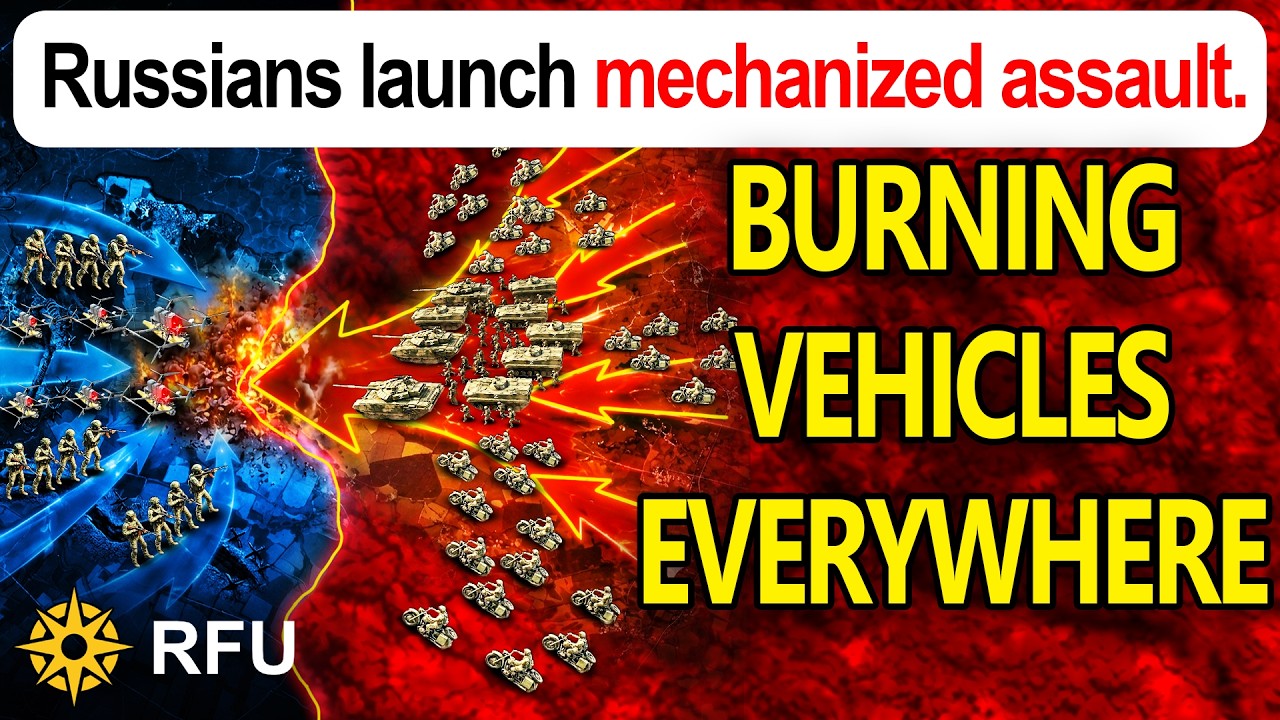
Here, Russian forces launched one of their largest mechanized assaults in months in an attempt to force movement on the Sloviansk axis. What followed left burning vehicles scattered across the battlefield and turned this attack into one of the clearest examples of how much was at stake in this push.
Russia’s goal here was to break through the Ukrainian forward positions covering the northeastern approaches to Sloviansk, especially in the Zakitne and Kryva Luka direction. These settlements matter because they form part of the outer defensive area shielding Sloviansk, so losing them would weaken the defense and open more favorable routes toward positions farther back. That is why Russia launched a larger mechanized assault here rather than relying solely on smaller infantry probes, as it was trying to force a breakthrough through the outer layer of the defense in a single push.
Russia tried to do that by sending two assault groups forward at the same time on separate routes, one toward Zakitne and the other toward Kryva Luka, in order to pressure the Ukrainian defense from multiple directions. This gave the attack a better chance of splitting Ukrainian attention and stretching drone coverage, preventing the defenders from focusing all their fire on one approach.
This attack plan was meant to give the Russians several advantages during the advance. Russians also committed motorcycles to reduce dependence on roads and tight formations, allowing the Russians to cross exposed ground faster without bunching into an easy target. The Russians also sent several tanks and BMP to their assault, meant to suppress Ukrainian positions and absorb fire while lighter elements pushed forward. In theory, that made the assault more resilient than a single dense column, because even if one vehicle was hit, other elements could still keep moving, giving the Russians a better chance of achieving their goal.
However, the main weakness of this Russian assault was that both groups still had to cross exposed approach routes into a defended sector. That allowed Ukrainian defenders to track the advancing elements early, slow them on the route in, and then strike vehicles and isolated groups as the assault began to break apart. Instead of arriving as one concentrated force, the Russian assault was reduced to smaller fragments that could be destroyed separately.
The footage shows exactly how that breakdown happened in practice, as Russian motorcycles, transport vehicles, and BMP move along roads and tree lines, but instead of building into one continuous assault, those elements appear increasingly separated as they come under fire. FPV drones strike BMP and other vehicles while they are still moving, catching them before they can reach cover or support the rest of the advance. In several moments, the assault appears to lose tempo completely, with individual vehicles destroyed on the route while other elements are forced to keep moving past wrecks or stop in exposed positions. Abandoned motorcycles and vehicles were hit after parts of the assault had already stalled, suggesting a loss of momentum before the attackers ever reached the line. By the time burning wrecks begin to accumulate along the approach, the footage shows that the real battle was no longer at the point of breakthrough, because Ukrainian defenses had already turned the route into a kill zone and broken the assault apart in motion.
Overall, the failed Russian assault shows that the Russian command is still trying to break the approaches to Sloviansk through larger mechanized attacks rather than relying only on small infantry group infiltrations. At the same time, Ukraine has shown that it still has the reconnaissance and strike coordination needed to respond to large-scale assaults in this sector. That means Russia may continue launching attacks of this kind, but each failure will make this method harder to sustain. If these assaults keep failing after detection, Russia will likely shift toward smaller and less visible attacks, because once Ukrainian reconnaissance spots a larger mechanized force, Ukraine can hit it quickly before it achieves anything meaningful.
🔴 Our interactive news map: https://www.rfunews.com/map
🔴 Subscribe to unlock full access to the map + exclusive strategic insights: https://www.rfunews.com/pricing
Today, there are important updates from the Russian Federation.
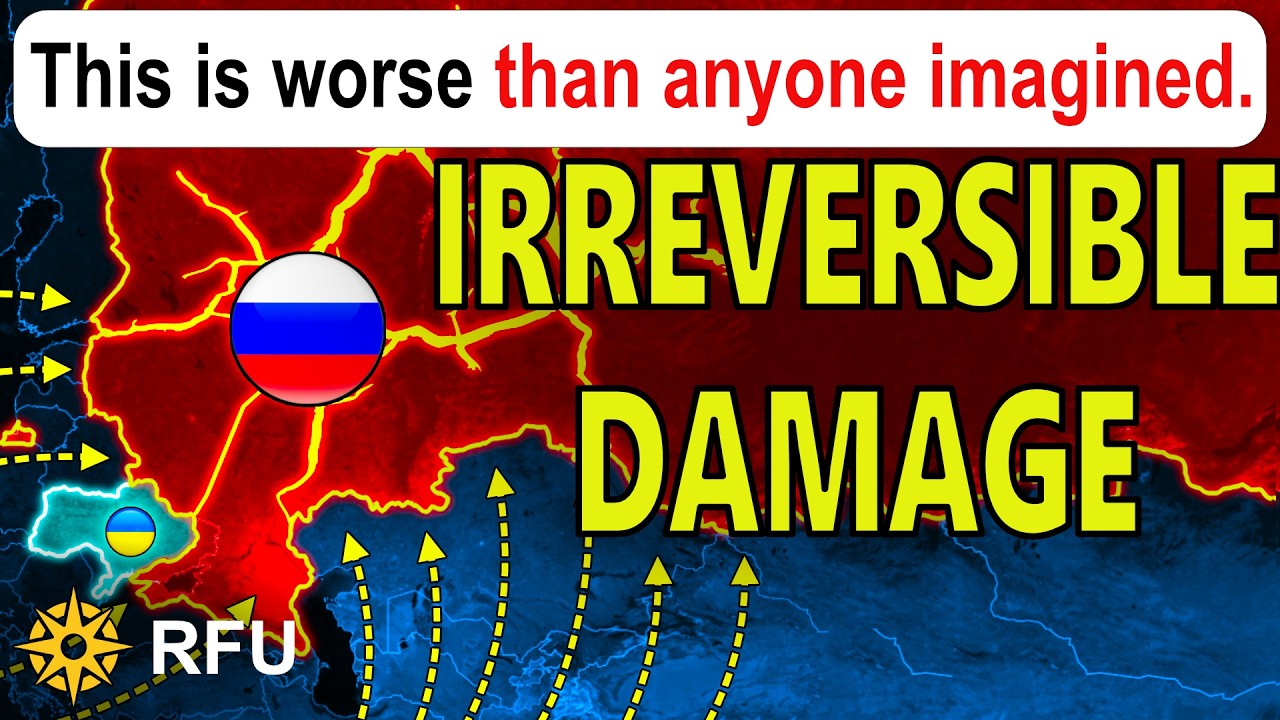
Here, new satellite images are revealing a shocking truth about the capabilities of the Russian army to wage mechanized assaults. The released data shows an irreversible damage dealt by the Ukrainians that is worse than anyone imagined.
Russia’s vast armored reserves that were built over decades by the Soviet Union for a massive war against Nato are effectively gone, and the scale of the damage has become undeniable. What once looked like an almost inexhaustible reserve of tanks and armored vehicles has been burned through in just a few years of fighting in Ukraine. The Soviet system stockpiled these machines across half a century, preparing for a prolonged, high-intensity conflict against the Western alliance. Yet Ukraine has managed to dismantle this strategic reserve in record time, exposing a level of attrition that the system was never designed to withstand. As a result, Russia is no longer drawing from a deep reserve but scraping its bottom.
Satellite imagery from before the war in Ukraine showed the sheer scale of this legacy. Across dozens of storage bases stretching from European Russia to Siberia, thousands of tanks stood in long rows: T Seventy-two, T Eighty, T Sixty-two, and even older variants, alongside tens of thousands of infantry fighting vehicles and armored personnel carriers. Estimates placed the number of stored tanks alone between seven and ten thousand, part of a broader Soviet arsenal that once exceeded fifty thousand. These depots were not just reserves, but the backbone of the Soviet mobilization doctrine, designed to equip entire reserve armies in the event of a large-scale war with the West. For decades, they symbolized Russia’s ability to sustain combat at a scale no one was supposed to match.
However, new satellite imagery reveals a completely different reality, as the war in Ukraine has shattered this legacy in under four years. Alone losses verified through available footage by independent open-source analysts already exceed four thousand tanks and more than thirteen thousand armored vehicles, and the true numbers are likely significantly higher. Entire storage bases that once held thousands of vehicles now appear nearly empty, reduced to scattered hulks or stripped frames. Analysis of key depots shows that of the original stockpile, only around two thousand four hundred vehicles remain, but more importantly, just a fraction of those is in condition to be used, even for spare parts. In some locations, fewer than a hundred vehicles can be considered usable, as the rest have either been destroyed, cannibalized for parts, or degraded beyond repair after decades of neglect.
This depletion has had a direct and devastating impact on Russia’s campaign in Ukraine, as it has forced a fundamental shift in tactics. Instead of maneuver warfare supported by tanks and mechanized units, Russian forces increasingly rely on infantry-heavy assaults, often using light vehicles or even motorcycles to support infiltration attempts of groups of up to three soldiers. These tactics are slower, more exposed, and significantly more costly in terms of manpower. Without sufficient armored support, Russian units struggle to achieve breakthroughs, and even when they gain some ground through enormous losses, they lack the mobility to exploit it.
As a result, the pace of the war has changed, with large-scale offensives now missing due to the loss of the Russians' ability to conduct rapid assaults with enough fire support. What remains is a grinding war of attrition, where progress is measured in meters rather than kilometers, and losses far outweigh gains.
Overall, the implications for Russia go far beyond the battlefield, as the prolonged duration of the war has turned Russia’s last great military advantage into a strategic liability. What the satellite images reveal is not just loss but a forced transformation, as Russia has traded decades of preparation for minimal territorial gains, exhausting a resource that cannot be replaced. The vast reserves inherited from the Soviet Union, intended to guarantee dominance in a major conflict, have been consumed with little in return. Through this, Russia has lost its ability to regenerate combat power at scale, marking a turning point that may define the outcome of the war itself.
💎 Special Offer: starting from just $4.99! Get 50% OFF full access to the map + exclusive strategic updates: https://www.rfunews.com/pricing
In this video, we will examine how Ukraine is draining Russians in Crimea.
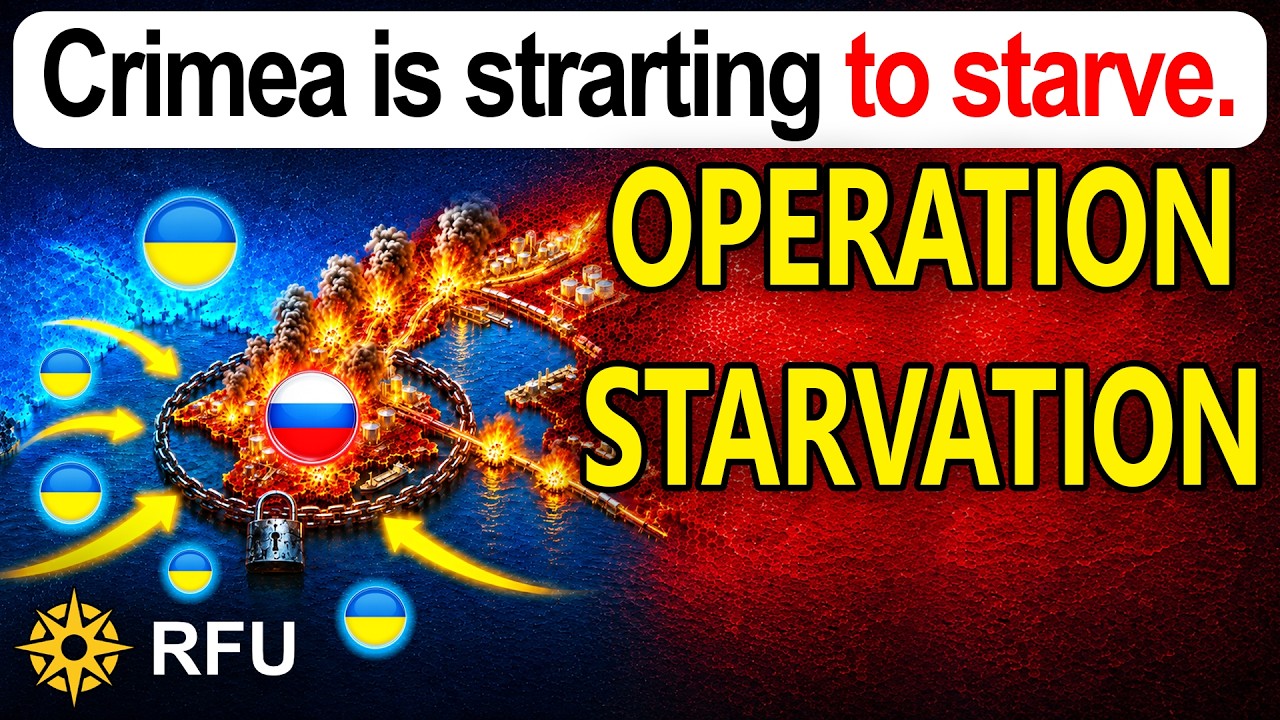
Here, the fuel crisis is spiraling out of control as Ukraine has cut almost all supplies to the peninsula, forcing the gas stations to run dry. The situation is so dire that Russians are already getting arrested and sent to prison for posting photos of arriving fuel trucks and are forced to switch to horses as their cars cannot be used.
Crimea has faced severe shortages due to successful Ukrainian medium range strike operations and sustained attacks on the peninsula’s logistical connections. The effects have become increasingly visible, with queues of up to three hundred vehicles at a single station in Alupka. In some areas, as shortages worsen, some residents have turned to alternative means of transportation, including horses and walking, with footage from Crimea showing a noticeable increase in horse-drawn travel.
In parallel with efforts to disrupt incoming fuel supplies, Ukraine has intensified strikes against oil storage facilities across Crimea to deplete Russian fuel reserves and prevent the accumulation of new stocks. As part of this campaign, Ukraine struck the Semykolodezyanska oil depot, damaging at least two fuel tanks. The facility serves as an important transshipment hub for the storage and distribution of fuel across Crimea and other Russian-controlled areas. Ukrainian drones also targeted the marine oil terminal in Feodosia, which contains seven fuel-storage tanks and is used to transfer oil. Repeated Ukrainian strikes have already caused extensive damage to the terminal’s storage infrastructure, and even if Russia tries to repair it, Ukraine is waiting for them to refill the tanks to strike them again.
With the strikes on oil depots and logistical routes, Ukraine aims to reduce Russian military mobility. Ukraine's broader objective is not to create a humanitarian fuel shortage for civilians in Crimea, but rather to make the peninsula less useful as a Russian military base. If fuel deliveries to Crimea are disrupted, Russian units have to ration fuel, and patrols are forced to be scaled back. Rapid troop redeployments also become more difficult as they won’t have the means to transport them, reducing Russia’s ability to reinforce weaker sectors when the Ukrainians are conducting counterattacks. With this tactic, Ukraine is also forcing Russia to divert resources and allocate more air-defense systems to logistics protection and deploy more troops to guard supply routes. Ukraine seeks to increase the operational burden on Russian forces, reduce their combat effectiveness, and complicate Russia's ability to use Crimea as a hub for military operations in southern Ukraine.
The cumulative impact of Ukrainian strikes has also forced authorities to introduce strict fuel-rationing measures across Crimea. In Sevastopol, gasoline purchases have been restricted to twenty liters of fuel per week through a QR-code system. Drivers receive a personal QR code that can only be used between nine AM and nine PM, while gas stations remain closed outside those hours, and gasoline sales have also been concentrated at just three stations. Cash purchases of fuel have been suspended for several days, and no new fuel vouchers will be issued in the near future. Officials state that these measures are intended to ensure fairness, but the real reason is to prevent abuse because cash cannot be traced, in contrast to the QR code system. These restrictions forced Russians to use their vehicles less and even switch to horses.
As fuel shortages worsen, Russians started to film fuel trucks because they have become so rare. As a response, authorities have prohibited the recording of fuel trucks and the publication of their routes on social media because it exposes them to Ukrainian intelligence. Under Russian law, those accused of providing such information can face prosecution under provisions related to aiding and abetting sabotage, offenses that carry prison sentences of between ten and twenty years. The rationale behind these measures is that Ukraine does not maintain continuous surveillance coverage over all of Crimea, so they rely on information gathered from social media posts. As a result, videos revealing the location, timing, or direction of fuel convoys provide valuable intelligence.
Overall, the situation in Crimea reflects a sustained effort to disrupt oil supplies and degrade the ability of Russian forces to move. As both supply disruption and information control intensify, the peninsula’s fuel network is being forced into a heavily constrained state. This is especially problematic for Russia, as they planned to use Crimea as a launchpad for military operations in the Zaporizhzhia oblast, and now they are forced to divert supplies to it to keep it afloat.

🔴 Our interactive news map: https://www.rfunews.com/map
🔴 Subscribe to unlock full access to the map + exclusive strategic insights: https://www.rfunews.com/pricing
Today, there are interesting updates from the Liman direction.
Here, Ukrainian forces launched a major mechanized assault against the Russian bridgehead north of Liman. After the Russians had spent over a year trying to outflank the Ukrainian town, the Ukrainians are threatening to starve out and collapse the entire salient in less than a month.
Russia’s lack of advance in this sector is due to it being defended by the Ukrainian Third Army Corps, so the Ukrainian command has recognized that the Russian bridgehead had become strategically vulnerable, and the Ukrainian plan switched from mere containment to cutting it off entirely.
The Russian bridgehead is supplied mainly through its northern section, where the Zherebets River is narrower, but Russian logistics are still under constant pressure from Ukrainian artillery and drone strikes. Additionally, Russian armored vehicles cannot reliably cross the river, while Russian artillery support has been degraded by persistent Ukrainian reconnaissance and counterbattery operations. Ukrainian planners identified these weaknesses and designed an operation specifically aimed at exploiting them.
The Ukrainian attack itself was meant to be launched from the north through the area around Ridkodub, where superior road infrastructure would offer Ukrainian mechanized forces an opportunity to move rapidly before Russian defenders could react. The plan called for armored vehicles to penetrate through the outskirts of the village and then advance along two tree lines that provided partial cover from Russian observation to deploy forces in the larger forested areas between Nove and Katerynivka, which can be used concealed infiltration routes into both settlements with the support of FPV, artillery fire and reconnaissance drones.
If we take a look at the topographic map, we will see that capturing this zone would place Ukrainian forces on the central high ground of the bridgehead. From that position, they could threaten Russian forces in multiple directions while simultaneously controlling the primary supply corridor feeding the entire bridgehead. If successful, the operation would place all Russian troops west of the river in a highly vulnerable position, forcing them to rely increasingly on supplies through aerial drone deliveries for sustainment. However, even that would be problematic given the fact that the Third Army Corps possesses some of Ukraine’s most capable anti-drone and electronic warfare units integrated directly into the corps structure.
Geolocated footage released by Russian units defending the sector showed how the Ukrainian assault unfolded, with Ukrainian armored columns advancing with Cobra-Two mine-resistant vehicles and Ukrainian-produced BTR-Four-E armored personnel carriers. Russian forces initially struggled to respond, with their standard FPV drones proving largely ineffective against the intense Ukrainian electronic warfare coverage shielding the attacking force. This forced Russian operators to switch to less-widely available fiber-optic drones, which are immune to radio jamming but require additional preparation and deployment time.
That delay in effective response proved critical, as the geolocated Russian footage confirms that Ukrainian forces managed to advance between three and five kilometers before the first Russian drones reached the assault groups. One video shows a Ukrainian armored personnel carrier being struck by a drone only after it had already completed its mission and was returning toward Ukrainian positions, notably after having successfully deployed its infantry dismounts.
Additional footage shows Ukrainian soldiers moving through the tree lines and establishing positions inside the contested area while Russian drones attempt to engage them. With Ukrainian releases delayed for operational security reasons, we have to rely on Russian reporting that fighting in the area remains ongoing, adding that Ukrainian troops succeeded in reaching and capturing territory that directly threatens Russian supply routes. As a result, the bridgehead is already experiencing growing logistical difficulties, and isolated Russian units may soon face a difficult choice between retreating closer to the river crossings or remaining in increasingly unsustainable positions.
Yet, official Russian sources attempted to portray the battle very differently, claiming that eighty Ukrainian soldiers had been killed within thirty minutes and that numerous Western-supplied vehicles had been destroyed. However, more reliable Russian military analysts were notably a lot less optimistic, and it was quickly revealed that some of the footage used to illustrate the supposed Russian defensive success originated from battles fought last summer over a year ago, creating a sharp contrast...
💎 Special Offer: starting from just $4.99! Get 50% OFF full access to the map + exclusive strategic updates: https://www.rfunews.com/pricing
In this video, we will analyze why politicians in Russia started begging to end the war.
Here, Russia’s economy can barely sustain the cost of the war for much longer, which is a looming disaster as pressure from the elite is rising and state control is weakening. Now, even Russian politicians are aware of the severity of the problem, begging Putin to stop the war before it breaks Russia.
Recently, a Russian State Duma deputy, Renat Suleymanov, said that the war needs to end now because Russia’s economy cannot sustain the current tempo. He also stressed that forty percent of the federal budget already goes to defense and security, which is crowding out normal spending. Defense spending is also driving inflation, which is officially five percent, and forcing cuts in civilian spending. Suleymanov warned that even after the war ends, Russia will face problems reintegrating hundreds of thousands of returning troops who experienced extreme violence, and that Russia will still carry these costs after peace.
Because of the combined budget, manpower, and infrastructure problems, the Russian economy can barely sustain the war at this intensity. Notably, Russian losses have exceeded one point four million casualties in the war, including dead and wounded, according to the Ukrainian general staff. This is critical because this year, Russia was unable to recruit as many soldiers as it lost from month to month, which means that the size of its army is now decreasing. At the home front, Russia's layered air defense system can no longer defend all critical infrastructure, because from the start of this year, Russia has lost almost two hundred air defense systems. This leaves Russia’s refineries and export infrastructure undefended against Ukrainian strikes. Ukraine exploited this and reduced Russia’s export capacity and even forced it to import finished oil products. Because of these strikes, Russia’s oil revenue is collapsing, which is why Russian officials are warning that the current tempo is unsustainable.
Against this backdrop, Zelensky sent an open letter to Putin, but the message was aimed at the war weary Russian elite, who have money, networks, and institutional access, making them dangerous for Putin. The proposal for a meeting was part of Kyiv’s attempt to highlight Moscow’s economic weaknesses and prove that Russia is not invincible, as also shown by the emergence of harsh criticism from Russian officials. The letter was intended to draw the attention of Russia’s elite to the fact that they are losing billions of dollars because of asset seizures and sanctions and to make them see the war as a personal financial threat, not just a national burden.
As a result of the economic and war related problems, Putin is slowly losing his control over the narrative and the expectations of the elite, not necessarily control over the state. Officials and business leaders are increasingly seeing events unfolding independently of Putin’s decisions, which suggests that the Kremlin has lost its control over defining the country's future and that pressure is growing among the elites. This shift is being driven by the mounting costs of a war that was originally planned as a quick victory but has become impossible to ignore for the Russians. Russia's business elite are demanding greater predictability because Western sanctions forced them to bring their assets back to Russia, and they had to watch five trillion rubles worth of private assets be confiscated over the past three years. Because of this, they increasingly want clear rules, stronger property rights, and confidence in the country's economic future, which is deteriorating because of the war. At the same time, the informal social contract between the Russian state and society has collapsed because, previously, the government largely stayed out of citizens' private lives in exchange for political passivity. Today, that arrangement has been replaced by expanding repression, mobilization, and increasing state control, with widespread internet restrictions serving as one of the clearest examples. As a result, the Kremlin finds itself in a self-defeating cycle, and the current system can endure only as long as Putin remains in power, yet every measure he takes to preserve and strengthen it ultimately accelerates its long term decline.
Overall, the pressures facing Russia are no longer confined to the battlefield but have expanded to the home front as well. The economic decline, combined with increasing elite dissatisfaction, is reinforcing itself, making the problem even worse for Putin. The longer Putin continues the war, the more the war itself becomes the force weakening Russia from within.

💎 Special Offer: starting from just $4.99! Get 50% OFF full access to the map + exclusive strategic updates: https://www.rfunews.com/pricing
In this video, we will analyze how Ukraine is rapidly turning Crimea into an island.
Here, Kerch has become the target of the intense Ukrainian campaign to isolate the Crimean Peninsula, with major fires erupting on both sides of the strait. Due to the non-stop Ukrainian strikes, the Russians are now bracing for the final decapitation strike of the last remaining logistical lifeline.
During the night of June Twenty-second, Ukrainian forces launched a large-scale operation against targets surrounding the Kerch Strait, which unfolded in carefully planned stages. Ukrainian forces first focused on weakening the defensive shield protecting the area, which hosts the Kerch Bridge, one of the most densely protected assets in Russia. The Ukrainian strikes targeted four S-Four-Hundred radar stations, two Pantsir air-defense systems, and both Kasta and Nebo-U radars near Kerch. These systems form critical elements of Russia's air-defense architecture around the bridge and eastern Crimea. By degrading long-range detection and defense capabilities, Ukraine created temporary corridors through which follow-on strike waves could penetrate more effectively.
The timing was particularly significant, as Russian authorities had recently announced the arrival of new fuel shipments intended for distribution across Crimea. Ukrainian commanders appear to have waited until large quantities got concentrated in a vulnerable location before striking them with long-range drones, and with parts of the defensive network disrupted, the second wave set the Crimean side of the strait on fire. One of the main targets was the Tes Terminal One fuel depot in Kerch, located less than a kilometer from the Crimean Bridge. Fires erupted across multiple storage tanks, with footage confirming that six of seven major fuel reservoirs were hit. Traffic on the Crimean Bridge was suspended for more than seven hours as explosions and air-defense activity spread across the area.
The third phase extended the fires across the strait into Russia's Krasnodar region. Ukrainian drones struck infrastructure around Port Kavkaz on the Chushka Spit, targeting fuel storage facilities and maritime transport assets that help sustain Crimea. Flames engulfed an oil terminal, while the ferry Panagia was reportedly damaged during the attack. The significance of these strikes lies in their coordination, because Ukraine not only targeted the fuel arriving in Crimea, but simultaneously also the infrastructure responsible for sending it there. The receiving hub and supply source were hit in the same operation, creating pressure from both directions, setting both shores on fire and disrupting logistics throughout the entire local transport system.
The scale of the attack has fueled growing concern among Russian military analysts, as many now openly expect a devastating follow-up strike on the Crimean Bridge after both shores were set ablaze. Their concerns are based on the growing range of tools Ukraine now possesses, with Russian analysts pointing to the upgraded FP-Two drones carrying larger warheads, the new long-range Behemoth drones with a low-flying trajectory and enough explosives to damage a bridge, and the already battle-proven Neptune and Flamingo missiles that recent strikes have proven are hard for the Russians to intercept. The Russians also pointed out the increasing role of Ukrainian naval drones and recently presented autonomous underwater systems, some of which have reportedly already been detected near the bridge, as they expect a second, much larger, combined naval and air strike that can overload even the extensive defense system of the Kerch Bridge.
These fears have been reinforced by repeated Ukrainian strikes against the bridge network connecting Crimea to Russian-controlled parts of Kherson and Zaporizhia. Satellite imagery shows growing damage to crossings near Henichesk, the Arabat Spit, and Armiansk. Multiple holes are visible in bridge decks, forcing Russian forces to deploy pontoon crossings and improvised bypass routes. Repeated FP-Two and Behemoth strikes have demonstrated that Ukraine can reliably return to hit the same targets again after repairs begin, confirming the Russian fear that the same capabilities can be applied against the Kerch Bridge itself.
Overall, whether Ukraine chooses to destroy the bridge or use it as bait to concentrate and then destroy incoming Russian supplies remains to be seen. However, what is clear is that Crimea is becoming increasingly isolated, as the northern land routes are under sustained pressure, reducing its effectiveness as a military hub. Now, fuel infrastructure is burning on both sides of the strait in the south, and Russian analysts openly acknowledge that Ukrainian strike capabilities and production of long-range...
🔴 Our interactive news map: https://www.rfunews.com/map
🔴 Subscribe to unlock full access to the map + exclusive strategic insights: https://www.rfunews.com/pricing
Today, there is important news from Sweden.
Here, Sweden decided to fundamentally change the balance of air power over Ukraine and completely transform Ukrainian air combat capabilities. What initially looked like another military aid package has rapidly turned out to be something much bigger, which will give Ukraine full control of the skies.
Everything is set to change in the Ukrainian sky, as Sweden officially announced during Zelensky’s visit that they approved the purchase of twenty new Gripen EF variants for the Ukrainian Air Force. However, the Swedes just made the deal a lot bigger, as they announced the transfer of sixteen Gripen CD fighter jets to Ukraine free of charge, with the CD variants arriving in Ukraine by the start of two-thousand-twenty-seven. During Zelensky’s visit, Swedish Gripen fighters escorted his aircraft, almost serving as a window into the future of Ukraine’s air force. On top of that, Sweden added a massive military support package worth four billion euros, including Meteor missiles, long-term maintenance support for the purchased Gripen aircraft, and additional funding for Ukrainian drone production.
Ukraine and Sweden have been quietly preparing this transition for months, with the formal letter of intent signed in late two thousand twenty five laying the groundwork for extensive cooperation, with the eventual purchase of up to one hundred fifty aircraft. Ukrainian pilots have already undergone introductory Gripen training and familiarization flights, while Swedish and Ukrainian defense officials coordinated logistics, maintenance, and operational integration behind the scenes. Even Ukrainian Foreign Minister Andrii Sybiha’s selfie with Gripens in the background posted last week appears to have been a deliberate hint that the deal was struck, with Zelensky making it official.
However, possibly more importantly, Ukraine will also receive Meteor long-range air-to-air missiles together with the Gripens. This can be one of the most significant aspects of the deal because the Meteor fundamentally changes how Ukrainian pilots can engage Russian aircraft. The missile can strike targets at distances approaching two hundred kilometers and possesses one of the largest no-escape zones in the world. This means Russian pilots will both be engaged from a much further distance than before, and have a much smaller chance of being able to safely disengage once Ukrainian jets fire their missiles, even if they immediately turn away or attempt evasive maneuvers.
For Ukraine, this creates a massive operational advantage, as Russian aircraft currently rely heavily on operating behind the frontline while launching glide bombs from relatively safe distances. Meteor missiles threaten these aircraft far earlier, pushing the safe zone for Russian pilots too far behind the frontline to conduct devastating glide bomb attacks on Ukrainian cities and defensive positions. This means that Russia’s most effective aerial support tactic is now well within Ukraine’s ability to intercept.
The Gripen jet itself is equally important because it was designed specifically for the kind of asymmetric warfare Ukraine is already fighting. During the Cold War, Sweden expected that Russian missile strikes would quickly destroy traditional airbases. As a result, the Gripen was engineered to operate from highways, improvised runways, and dispersed locations with minimal crews and extremely rapid turnaround times. Specifically, it only takes around ten to fifteen minutes to fully rearm and refuel the Gripen, with a team of one certified technician and five conscript mechanics needing only two trucks with fuel, ammunition, and basic equipment to achieve these rapid times.
This fits Ukraine’s wartime reality perfectly, as Ukrainian aircraft are already constantly relocating between temporary bases to survive Russian missile attacks. The difference is that Ukrainian pilots have been adapting older Soviet aircraft to this role, while the Gripen was purpose-built for it from the beginning. Small maintenance teams can refuel and rearm the aircraft within minutes, allowing very high sortie rates even under constant missile threat.
At the same time, the future Gripen EF variants represent an even larger leap forward, as unlike the older CD models, the EF incorporates the new superior Raven radar, advanced infrared search systems, which will allow Ukrainian pilots to detect and engage threats much earlier. Combined with a modern electronic warfare suite, it improves survivability against Russian air defense systems. The improved fuel capacity for extended combat range with a more powerful engine gives the Gripen the ability to carry significantly more weapons, including up to eight Meteor missiles. All this allows the Gripen EF to transform...

💎 Special Offer: starting from just $4.99! Get 50% OFF full access to the map + exclusive strategic updates: https://www.rfunews.com/pricing
Russia has finally been forced to suspend transit through the Azov Sea, effectively shutting down one of its most important commercial and military shipping corridors. Following devastating Ukrainian attacks on over a hundred Russian vessels off the coast, Russian ports have now officially surrendered to the Ukrainian Crimea-campaign, and stopped accepting new applications for passage through the Kerch Strait. However not just this, as navigation through the canal linking the Don River with the Sea of Azov was also suspended, effectively shutting down all maritime transport into Crimea.
The immediate trigger for this measure was Ukraine’s extraordinary maritime campaign, with Russian authorities suspending transit after Ukraine destroyed and disabled one hundred and six Russian vessels, most of them tankers, within only eight days. The consequences extend far beyond the waterways themselves, as ports throughout the region have been forced to halt new loading operations because ships can no longer enter or leave. As a result, trucks carrying export goods have begun backing up for miles outside terminals, unable to unload their cargo.
With Ukrainian drones beginning to target the ports and their storage infrastructure, Ukrainians are forcing Russians’ own security measures to quickly contribute to the major paralysis affecting one of Russia’s most important export regions. Up to thirty percent of Russian oil shipments and ninety percent of grain exports move through the Black Sea system, so the Ukrainian strikes are depriving Moscow of valuable revenue of fifty to sixty billion US dollars.
However, sinking ships represented only the second phase of a much broader Ukrainian operation. Once Russian vessels operating throughout the Sea of Azov suffered heavy losses, Ukrainian planners shifted their attention toward the ports expected to shelter the surviving fleet. This strategic logic proved highly effective, as Ukrainian long-range drones began striking the supporting infrastructure inside the ports themselves.
Footage confirmed attacks against facilities in Azov and Taganrog, demonstrating that terminals, fuel infrastructure, and logistics areas had become the next priority after the surface vessels had withdrawn. Russian authorities suddenly were left without options, as allowing ships to gather inside ports would simply transform them into stationary targets alongside fuel depots, warehouses, and loading equipment. Closing the ports became the only practical option, but it didn't help to minimize the danger, as this solution merely prevented ships from concentrating together. It could not protect cranes, terminals, storage tanks, repair facilities, and supporting logistics infrastructure, all of which remain vulnerable to continued Ukrainian strikes. Due to this, even if the ban on maritime traffic is eventually lifted, damaged port infrastructure will continue limiting Russian exports and naval operations for an extended period.
It is important to understand that the Ukrainian maritime campaign follows an equally devastating first phase directed against Crimea’s ground logistics. In this first phase, Ukrainian forces systematically targeted bridges connecting Crimea with Russian-controlled territories in southern Ukraine, repeating the strikes once the Russians started repairing them or establishing improvised crossings, leaving the Kerch Bridge as Russia’s primary remaining connection. At the same time, Ukrainian drones devastated traffic along the Mariupol-Crimea highway, turning it into a junkyard for military trucks, fuel convoys, and repair equipment, blocking all Russian road-based transport. Recent reports show that cargo traffic collapsed by seventy-one percent, falling from almost four thousand vehicles daily to around one thousand one hundred.
Combined with strikes on energy and fuel infrastructure in Crimea, Russian fuel shortages only worsened, electricity blackouts sometimes lasting over twenty-four hours became commonplace, and collapsing tourism throughout the peninsula crippled the local economy that so depends on it. Now, Ukraine is applying precisely the same sudden, concentrated pressure at sea, extending the isolation from land to maritime logistics, showcasing how Russia's control over Crimea turns symbolic with each passing day.

💎 Special Offer: starting from just $4.99! Get 50% OFF full access to the map + exclusive strategic updates: https://www.rfunews.com/pricing
In this video, we will analyze how Russian soldiers now openly threaten Putin with a revolt.
Here, decorated Russian veterans issued public demands directly to the Russian president, with an ultimatum to meet or face the consequences of a second Wagner rebellion. With regular army soldiers now on the brink of a mutiny, what follows can tear the Russian army in two, and turn Russia’s power order upside down.
А recently released viral video by a Russian serviceman from the Voronezh region who fought in Ukraine and has built a significant social media following sent shockwaves. It showed him calling for representatives of the Defense Ministry and other security agencies to approach him so he can deliver a message directly to Vladimir Putin. According to the veteran, thousands of Russian soldiers are being imprisoned in pits, tortured, abused, and declared missing after refusing to follow suicidal orders or surrender money to their commanders. He demanded a live televised meeting with Putin, warning that if such a meeting did not occur, the army would turn its weapons against the Kremlin. In a follow-up recording, he insisted the threat was not a bluff and stated that any action against him or his family would become a signal for further action. The video rapidly accumulated millions of views across social media, giving the allegations a wide audience inside and outside of the Russian military.
The angry message reflects long-standing complaints surrounding Russian assault tactics, as Russian commanders have repeatedly relied on costly frontal attacks against prepared Ukrainian defenses, mined terrain, and heavily monitored approaches. Officers directing operations from a safe rear headquarters avoid the danger of confronting Ukrainian lines, while frontline soldiers bear the overwhelming casualties. Refusing orders reportedly exposes troops to physical punishment, confinement, execution, or accusations of desertion followed by a transfer to a penal unit. Such practices replace voluntary discipline with forced coercion, completely eroding the trust between commanders and the rank-and-file. The significance of the public appeal lies not only in its accusations but also in the identity of the messenger. A decorated veteran publicly challenging Putin represents a far more serious warning than anonymous online criticism because it comes from someone who openly identifies with Russia's military and has the merits to prove it.
The last time this happened, it led to Yevgeny Prigozhin's Wagner rebellion, where a fifty thousand strong mercenary army took control of the city of Rostov and Russian army headquarters before beginning a march on Moscow itself. This also began with public accusations against Russia's military leadership over unnecessary losses, corruption, and battlefield mismanagement before escalating into an armed rebellion. However, Wagner was a separate private military company with a limited sphere of influence, while discontent spreading inside the regular Russian military would present a fundamentally different challenge. The regular army provides the manpower, armor, artillery, logistics, and command structure sustaining operations across the entire front; so any localized refusals, disciplinary breakdowns, or disrupted coordination could complicate military operations and create opportunities that Ukraine might seek to exploit, even without producing a nationwide uprising.
The video appeal reveals another deeper issue, as the Russian army is increasingly operating in two very different military realities. Highly trained soldiers like drone operators, electronic warfare specialists, communications personnel, and many more, generally face lower casualty rates because their skills are difficult to replace. Meanwhile, the conventional infantry continues conducting many of the highest-risk attacks with close to zero chance of survival. This builds on the fact that these specialist soldiers, such as drone operators, are often the ones who strike and kill deserters or surrendering soldiers; creating not just resentment for the unequal distribution of danger, but full-on hatred for the specialists that are actively killing them every single day.
Despite Russia maintaining extensive internal security structures, military police, and intelligence services specifically designed to suppress collective dissent, the Wagner rebellion started with these exact videos of dissatisfied soldiers calling out their leadership directly. Now we see the same pattern in decorated soldiers with a high following, and if this repeats in larger scale, it could end up becoming worse for Russia than the Wagner rebellion that started it all.
💎 Special Offer: starting from just $4.99! Get 50% OFF full access to the map + exclusive strategic updates: https://www.rfunews.com/pricing
In this video, we will analyze why Russia lost its chance to end the war quickly.
Here, the Ukrainian president offered the Russian president the last chance to end the war for good and save face before it's too late. However, Putin explicitly rejected the deal and chose to continue the war, pushing Russian beyond the point of no return.
Recently, Putin faced an unexpected opportunity to exit the war and freeze the frontline where it now stands. Ukraine’s Foreign Minister Andrii Sybiha warned that conditions for Russia will only deteriorate as battlefield losses and logistical breakdowns will only increase. Now, Russia faces economic decline because of the attacks on its energy sector and sanctions, which created the opportunity for Ukraine to address Putin from a position of strength with an open letter.
In his open letter to Putin, Zelensky calls for an end to the war through direct, face-to-face negotiations in a neutral country. Simultaneously, he reiterates Ukraine’s willingness to pursue peace by proposing a ceasefire for the duration of negotiations and advocating an all-for-all prisoner exchange, in stark contrast to Russia’s determination to continue the war. Zelensky openly stated that Ukraine knows that the Kremlin intends to continue the war at least until two thousand and twenty-eight, which they hope will give their army enough time to capture the rest of Donbas. However, Zelensky underlined that Russia is suffering over thirty thousand casualties each month, with approximately two-thirds of these losses being fatalities. This also helps to explain why Russia is unable to maintain its offensive tempo in reality. Concluding his message, Zelensky addressed Putin personally, arguing that he will ultimately have to fight for his own survival rather than for Russia itself, because once the Russian population grows tired of the war, changes will occur one way or another, indicating that Ukraine sees the distress of Russian citizens as a serious destabilizing factor for Russia.
Despite Ukraine’s increasingly improving position on the battlefield, Kyiv continues to emphasize its desire for peace and negotiations. Ukrainian leaders argue that Ukraine is no longer merely preventing a Russian victory but is beginning to achieve tangible strategic results, such as territorial gains and the effective disruption of Russia’s logistics, fuel, and oil revenue. This shift is becoming increasingly visible on the ground because, for the first time in nearly three years, Ukraine has begun gaining territory monthly rather than losing it. Notably, Ukraine recaptured six hundred square kilometers this year, while Ukrainian medium-range strike campaigns are disrupting logistics along major highways throughout Russian-controlled areas in Ukraine. This significantly restricts Russia’s ability to supply frontline forces and reduces their offensive capabilities. Simultaneously, Ukraine’s long-range strike operations continue to attack oil refineries, fuel infrastructure, and defense-industrial facilities, putting pressure on Russia’s war-oriented economy and reducing its capacity to sustain military operations and even meet budget demands. The combination of these factors puts Ukraine in a position of increasing strength, as confirmed by Zelensky’s statement.
Although the letter was directed at Putin, in reality, it was an open statement intended for the Russian elite, which has become tired of the war. This is proved by the statements of heads of major corporations, who criticize the high interest rates and complain about falling demand. Zelenskyy sought to challenge the perception of Russia’s supposed superiority, which is hard to maintain as strategic targets inside Russia burn every day. As the war drags on, these strikes will continue, and Russia will find it increasingly difficult to finance the war. The letter will not spark an uprising in Russia, but it will force the elites to question whether continuing the war is beneficial for them and show the growing divide between war objectives and the cost required to achieve them, which is increasingly falling on the shoulders of Russia’s richest people.
Overall, Putin rejected the Ukrainian’s proposal for negotiations, which means he missed his last chance to secure relatively favorable terms for a settlement of the war he started. While Ukraine continues to gain momentum on the battlefield and deepen strikes against Russia’s military and economic infrastructure, Moscow appears determined to continue fighting. Because of this, Moscow's position will only worsen, and any future negotiations are likely to take place on terms more favorable to Kyiv.
