News & Politics
💎 Help us expand the coverage! Subscription starts from just $4.99! Get 50% OFF full access to the map + exclusive strategic updates: https://www.rfunews.com/pricing
Today, the biggest development is coming from inside Russia itself.
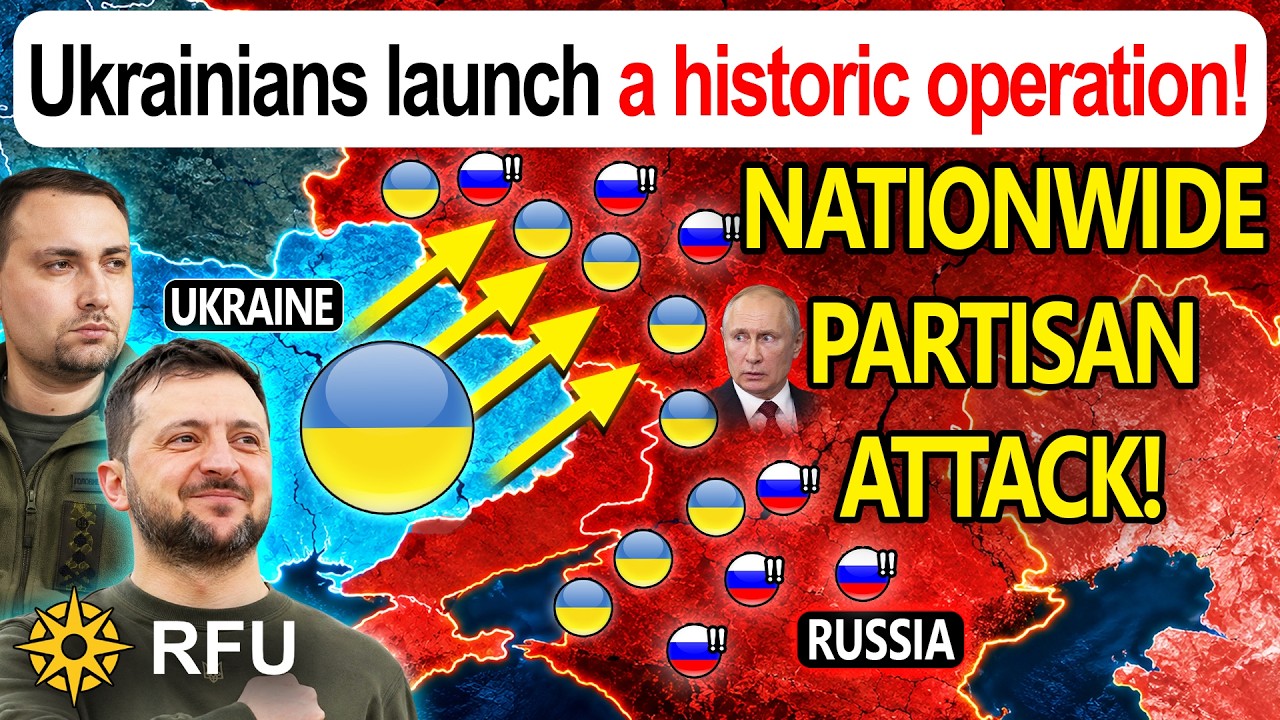
Here, Russian partisans fighting on the side of Ukraine conducted a large-scale operation deep into enemy-held territory that paralyzed the Russian railway logistics.
The main Ukrainian intelligence Directorate or GUR, recently released footage of this truly historic covert operation. Russian citizens fighting for Ukraine in the Freedom of Russia Legion were sent to infiltrate all across Russian-controlled Ukraine in one unified operation. Speaking Russian and pretending to be citizens of the Russian proxy states in Donbas, they remained undetected as they moved toward their target, the most critical component of the Russian army’s entire logistics network: their railway lines.
Simultaneously setting explosive charges onto the fuel carts in the middle of the night, all the major Russian railway hubs were targeted. Ukrainians blew up trains in the major cities of Donbas and Luhansk, which form the capitals of Russia’s LPR and DPR puppet states. They set fire to locomotives and rail relay stations in Mariupol and Melitopol, where all of Russia’s logistics in the Zaporizhia and Kherson regions flow through. The undercover operatives even penetrated as deep as Rostov-on-Don, where the main headquarters of Russian high command overseeing the war in Ukraine is operating from. Nowhere was safe, as the footage shows scores of trains and crucial railway infrastructure exploding and going up in flames.
Russians themselves responded with outrage. They complain that too many Russians inside of the country are increasingly showing support and favoritism toward Ukraine. They say that these people are responsible for regular partisan attacks inside of Russia and the Russian-controlled territories in Ukraine. This is not surprising however, as the Ukrainian intelligence directorate is actively advertising to people in these territories and opponents of Putin’s regime to get in contact with them to become a part of the resistance movement, including training, intelligence gathering, and even direct sabotage attacks.
Because of this, recent partisan attacks have spread to railway logistics in cities as far as Kemerovo, Tyumen, and Yekaterinburg. Here, three locomotives in dual-use by the Russian armed forces were burned down, paralyzing Russian transport capacity across the most important transport lines connecting Siberia with Russia-proper across the Ural mountains. Most often however, sabotage occurs much closer to the frontlines in Ukraine, where all disruptions are felt immediately on the front. Partizans set fire to railway cabinets in Luhansk, which ground transport to a temporary halt long enough for follow-up strike drones to take full advantage of the stationary trains. Vehicles used by Russian soldiers in the rear are also common targets for lower-level sabotage by resistance members, preventing transport of supplies, ammunition, and reinforcements to the front. While the impact of a single vehicle may seem small, this results in one less vehicle that Ukrainians have to deal with on the front, one Russian sector that starts running low on supplies, and fewer potential infiltrators causing a headache for Ukrainian forces in the rear.
Overall, if every minor action adds up to a consequential effect, Ukrainians just unleashed a tidal wave of frontline impact. The coordinated operation executed by volunteers of the Freedom of Russia Legion not only destroyed over ten thousand tons of fuel supplies, but the carriers and locomotives that cart supplies around as well. As the railway continues to form the backbone of the Russian army’s logistics, the disruptions and delays that this destruction has caused are significant. With Russian officials seemingly unable to stem the wave of resistance fighters operating not only within the Ukrainian territories they control, but throughout mainland Russia as well, the pressure is building up, and continued resistance becomes a more accessible option with every operation that passes.

🔴 YOU ARE MISSING HALF OF OUR VIDEOS! Subscribe to unlock all our reports and support our work: https://www.youtube.com/channe....l/UCcNB1tZYpeDetqCad
Today, the biggest news is coming from the Russian net.
Here, the Russian bot farms have just gone completely silent, as Russia’s massive disinformation and manipulation network online was reduced to zero. Zelensky recently stated that following Ukrainian strikes on three of Russia’s nine largest data centers, a noticeable drop in bot activity was recorded across social media. These claims are confirmed by Cloudflare, one of the largest companies providing internet services. They have released statistics showing that known Russian bot traffic coming from the Russian side of the internet dropped to zero point four percent after the Ukrainian strikes, from a staggering eighty-four and a half percent before. This means that essentially, Russia’s information warfare in the online space has ground to a halt.
The impact of this is visibly noticeable. Online activity relating to political parties in the West has experienced a notable drop. Statistics from independent factcheckers in Germany for example, show an across-the-board drop in mentions of all political parties online by between twenty and thirty-seven percent. Countries across the West are experiencing similar trends, while wider claims on certain extremist parties’ online activity experiencing extreme drops of up to eighty-six percent remain unconfirmed.
The main thing that the confirmed and fact-checked statistics show is that Russia has an intense and ongoing campaign across the world to influence political debate. How this frequently works is that certain bots make extremist posts and false claims online in order to invoke a response and spread misinformation on important subjects. Other bots pretending to be voters from both sides of the political spectrum then pretend to argue with each other, hoping to bait real people into interacting with the false premise, which in turn boosts its visibility to other real people. This is how Russia creates extreme political and social divide in the countries that oppose it fundamentally. It is no wonder, therefore that when Zelensky stated that there was less hate, less division, and fewer provocations in the online space following the Ukrainian strikes, he spoke the truth.
Importantly, Russia does not only use its disinformation bot network against the West, but Ukraine has become a massive target as well. Ukraine’s new commander in chief Mykhailo Drapatyi recently stated that coordinated information attacks against him began from his first days in office, as has been the case against the Ukrainian army and government since the start of the war. Through this, Russia attempts to sow social distrust and unrest in Ukraine, as the determination of Ukrainians against the Russian invasion is what allowed the country to hold on against Russia for so long.
Overall, Russia actively seeks to break the will of Ukrainians and their Western allies at a massive scale. That scale however, has been reduced by an equally massive scale after Ukraine hit and destroyed three of Russia’s nine largest data centers that allow the bot networks to run day and night. With the information space having been much cleared up in recent days, it is important to remember how Russia’s game of dividing and conquering must not be allowed to succeed, as Russia’s crimes against humanity in Ukraine are something that all people truly oppose.
💎 Special Offer: starting from just $4.99! Get 50% OFF full access to the map + exclusive strategic updates: https://www.rfunews.com/pricing
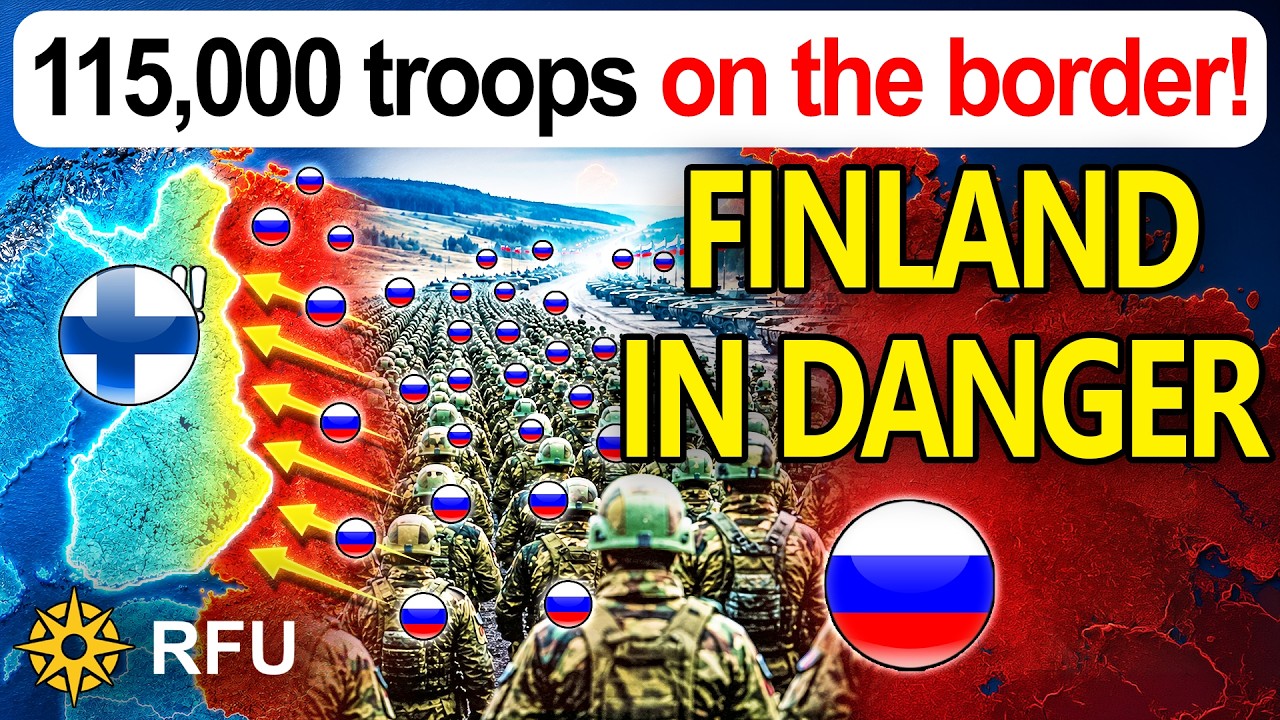
Finland is in danger as Russia rebuilds old garrisons and expands nineteen military locations across its northwestern region, creating facilities capable of receiving tens of thousands of soldiers once the war in Ukraine ends. The most significant developments near Finland include Pechenga on the Kola Peninsula, Kandalaksha in the Murmansk region, and Petrozavodsk in Karelia, giving Russia more space to house and support forces close to Finland. Finnish Army Commander Pasi Valimaki estimates that facilities in the immediate area facing Finland could eventually accommodate around eighty thousand troops, up from approximately twenty thousand previously. Across Russia’s wider northwestern military region facing Nato’s Nordic and Baltic frontier, that potential force could rise to as many as one hundred fifteen thousand soldiers. Pechenga is expected to gain capacity for as many as seventeen thousand troops, while the reactivated Petrozavodsk garrison is being developed to support units of the Forty Fourth Army Corps operating near Finland. The country therefore faces the emergence of a large and permanent Russian military force along its eastern frontier.
Alongside this expanding military belt, Moscow is increasingly portraying Finland as an active participant in Ukrainian attacks on Russian territory. In April, Russian Security Council Secretary Sergei Shoigu claimed that Ukrainian drones were approaching Russia through Finland and the Baltic states, warning that Moscow could invoke self defense if those countries deliberately allowed their airspace to be used. Russian military commentators have also alleged that drones attacking the Leningrad region used less protected coastal routes through the Baltic area, although these flight paths have not been independently established and regional governments reject claims of deliberate assistance. These accusations intensified after Finland temporarily restricted aviation and maritime traffic over the eastern Gulf of Finland to protect its territory from stray drones, although Finnish authorities reported that no drones entered its airspace. Moscow nevertheless portrays these precautions as evidence of a Ukrainian air corridor, framing its military expansion as a response to supposed Finnish aggression.
These accusations could give Moscow a justification for redirecting its forces from Ukraine toward Finland once the current war ends. Russian units returning from Ukraine would already have years of recent battlefield experience, allowing Moscow to shift a combat tested force toward Finland without having to build and train a new army from scratch. By transferring these formations northwest, the Kremlin could preserve their combat readiness and accumulated battlefield experience for another confrontation.
The danger grows if Moscow believes this experienced force could exploit a weakness exposed during the Iran war, where sustained drone and missile attacks placed severe pressure on Western air defenses. Cheap drones forced defenders to expend scarce and expensive interceptors, exposing how quickly Europe could struggle to replace its missile stocks during a prolonged conflict. A Baltic Defense Initiative assessment examines a hypothetical Nato conflict in which Russian drone saturation and long range strikes rapidly weaken regional air defenses before larger allied forces arrive. This is a stress test rather than evidence of an approved Russian invasion plan, yet it shows why Moscow may view Nato’s northern defenses as vulnerable to an intense opening attack. Moscow may also believe Nato’s ground forces could be exploited during the same period, because the alliance is still assembling some of the permanent forces intended to defend its eastern members. One supporting example is Germany’s permanent Forty Fifth Armoured Brigade in Lithuania, which is intended to strengthen the country’s defense against a potential Russian attack but will not reach full operational capability until the end of twenty twenty seven. Combined with limited interceptor stocks, that delay could encourage Russian commanders to gamble on overwhelming local defenses before Nato can reinforce the region and respond effectively.
Overall, Russia’s preparations could turn the Finnish border into a permanently militarized frontier even without an immediate invasion. Finland shares Nato’s longest direct border with Russia, so defending it would require permanently deploying air defenses, surveillance systems, ground forces, and logistics across the northern frontier. Over time, this could lock Nato into an expensive buildup and allow Moscow to drain alliance resources simply by keeping the threat alive. Meanwhile, Russia is preparing the forces needed to raise the pressure while developing the argument it could later use to justify escalation.
💎 Help us expand the coverage! Subscription starts from just $4.99! Get 50% OFF full access to the map + exclusive strategic updates: https://www.rfunews.com/pricing
Today, there is important news from the Russian Federation.
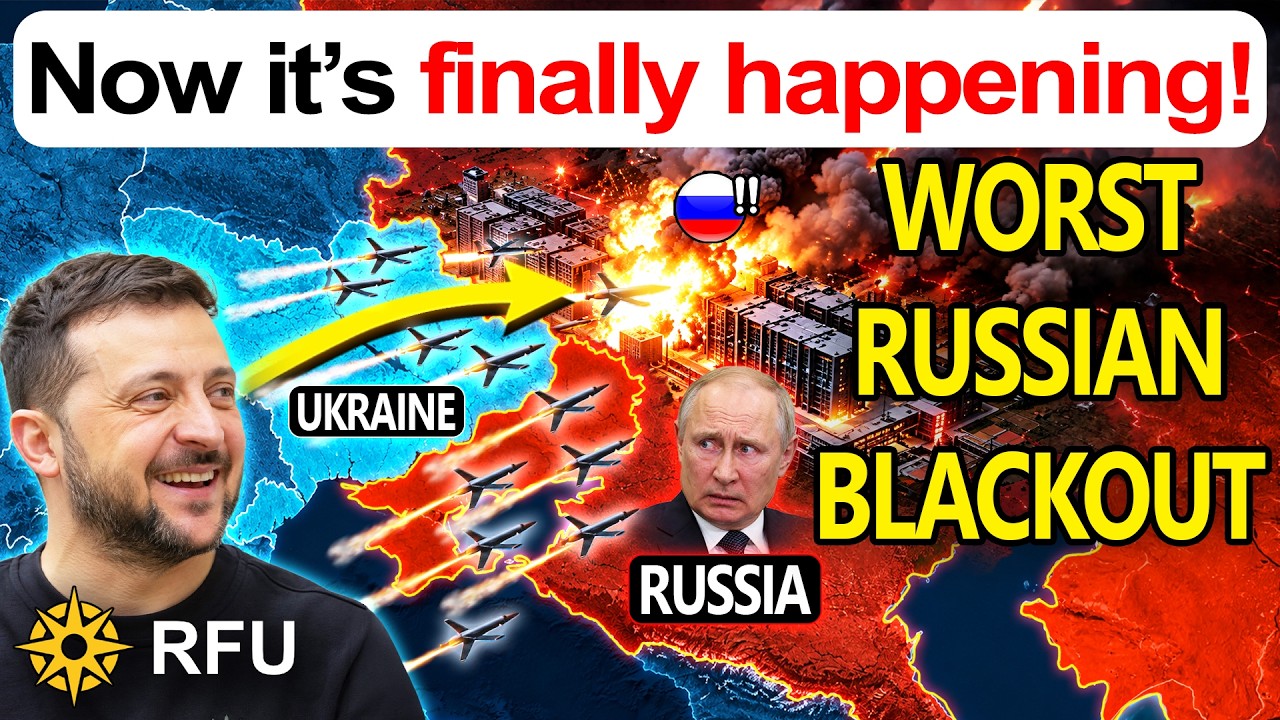
Here, Russia’s technology sector has suffered a major blow after drones struck Yandex’s biggest data center in Sasovo, in the Ryazan Region, triggering a fire and forcing the facility to shut down completely. Located on the former premises of the Sasta machine-tool plant, which supplies Russia’s engineering industry and was also targeted in the attack, the complex hosts tens of thousands of servers and represents Yandex’s most important computing facilities.
The Ukrainian attack immediately disrupted cloud infrastructure, as Yandex acknowledged electricity problems affecting one availability zone and advised customers to switch to alternatives. Although the company maintained that its principal consumer services remained operational, the complete shutdown demonstrated how quickly a physical strike can interrupt digital infrastructure supporting thousands of businesses, as problems were reported throughout various internet services in Russia within minutes after the attack.
Financial markets reacted immediately in panic as well, with Yandex shares falling approximately four percent during early Moscow trading, as investors were suddenly confronting a new risk: Russia’s most important technology companies could become increasingly vulnerable to the same type of disruption already affecting its energy and logistics sectors.
The timing is particularly significant because Russian strikes have recently targeted Ukrainian data centers, and now Russia is experiencing the consequences of attacks against its own digital infrastructure, while the economic implications could extend far beyond Yandex. Earlier attacks on Wildberries and Ozon facilities demonstrated how physical destruction can disrupt online commerce. Data centers represent an even more complicated challenge because they support the software systems that allow businesses to function.
What makes it even more dangerous, warehouses can often be replaced through smaller storage facilities, alternative distribution routes, and dispersed inventories. Large data centers are harder to replicate quickly, as they require enormous electrical capacity, cooling equipment, specialized servers, high-speed connections, and carefully coordinated software environments. Although workloads can be transferred between facilities, relocating massive datasets and computing capacity requires substantial investment and technical preparation. Consequently, repeated disruptions could create mounting costs even when companies successfully restore their services.
Russia’s digital economy depends upon these systems for cloud storage, financial transactions, corporate databases, telecommunications and government administration. Yandex itself operates search, navigation, transportation, storage and artificial-intelligence services, including YandexGPT. Disruption across several independent providers could therefore produce cascading problems: slower applications, interrupted online payments, unavailable business records, delayed administrative services and increasingly unreliable commercial platforms.
The next potential biggest target could be the Udomlya data center in Tver Oblast, processing nuclear-reactor simulations and storing state video archives from across Russia, the destruction of which could disrupt the work of the Russian government. The second major target could become Moscow’s M-Nine data center, which is a hub that, if taken offline, could cause a large part of the Russian internet to suffer immediate disruption, potentially affecting banking transactions, mobile connectivity, and government portals. Despite Russia possessing a geographically distributed data-center industry, most of the operational facilities are located inside or near Moscow.
After such a campaign, Russian companies will have to restore data access, redirect workloads, investigate interrupted transactions, and reassure customers. Some may need additional backup capacity, while others could reconsider relying exclusively on domestic infrastructure. For the Russian government, repeated incidents would create another expensive challenge alongside protecting refineries, transportation networks and industrial facilities.
Overall, the scale of the risk for Russia makes the Sasovo attack fundamentally different from previous attacks on warehouses. The immediate damage concerns physical equipment, but the secondary consequences can spread through businesses that never experienced the attack directly, demonstrating a vulnerability that Moscow can no longer ignore but can’t fix quickly enough as well. After years of Russian attacks against Ukraine’s civilian infrastructure, the consequences are increasingly reaching Russia’s own digital economy.
💎 Special Offer: starting from just $4.99! Get 50% OFF full access to the map + exclusive strategic updates: https://www.rfunews.com/pricing
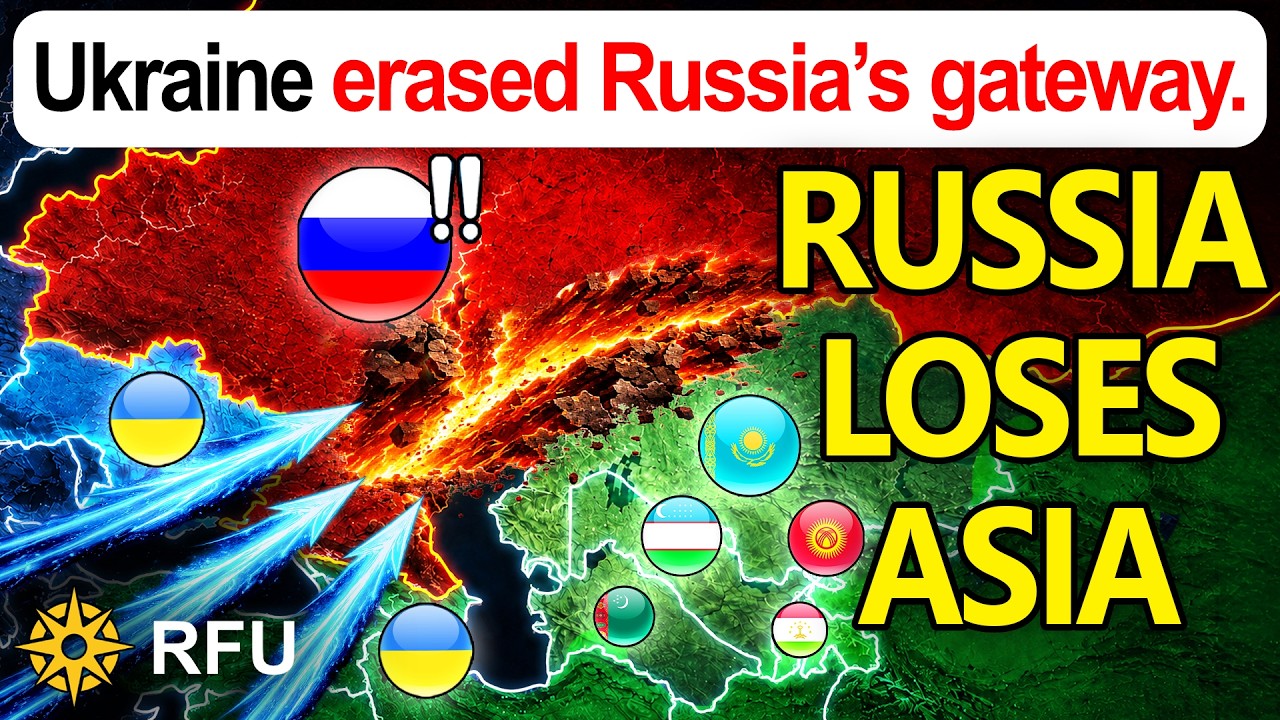
Ukraine has massively eroded the political and economic influence Russia built across Central Asia by disrupting the supply networks that made Moscow an indispensable regional partner. Russian analysts are warning that Ukrainian long-range strikes have damaged the refineries and transport infrastructure supporting exports, leaving Russia less capable of guaranteeing the fuel deliveries neighboring economies once treated as secure. Those deliveries kept regional economies dependent on Russian supplies and infrastructure, allowing the Kremlin to turn economic reliability into political leverage. After the ban on gasoline, kerosene, and diesel exports, Russia is rapidly losing control over one of its main sources of regional pressure, while every disrupted delivery gives neighboring governments another reason to reduce their exposure to Russia.
In the most extreme cases, Kyrgyzstan imports more than ninety percent of its gasoline from Russia, while Tajikistan obtains virtually all of its petroleum products and remains heavily dependent on Russian supplies. In June, Russian rail shipments of aviation fuel to Central Asia fell by more than ninety-two percent from the previous month, while gasoline deliveries declined by thirty-four percent. Some exports continued under pre-existing agreements, but those exceptions did not make Russian supply reliable again, as these countries have begun sharing in the Russian fuel crisis. Countries facing shortages are now buying fuel from Kazakhstan and other regional producers that are self-sufficient in their fuel production, creating contracts and transport networks that will remain in place even after Russian production recovers.
As a result, the damage will be difficult for Russia to reverse because Central Asian governments cannot base their economies on a supplier whose refineries remain vulnerable and whose own shortages come before deliveries abroad. Once another supplier has proven that it can keep vehicles moving and businesses operating, governments have little reason to return to the same level of dependence on Russia. The shift became clear when Russia began seeking roughly fifty thousand tons of gasoline from Kazakhstan. As such, it has become incredibly clear that a country that once supplied all of Central Asia and used this to its advantage was now asking to help cover shortages at home, weakening Moscow’s standing as the main energy provider.
Russia will lose far more than fuel sales as competing countries take over the commercial relationships and transport links that once carried Russian influence deeper into Asia. The oil-rich countries of Kazakhstan and Azerbaijan gain leverage when their fuel keeps neighboring markets supplied, while more regional trade crosses the Caspian Sea instead of moving north through Russia. The trade impact is already visible on the route between the Kazakh port of Aktau and the Azerbaijani port of Alat near Baku, where container traffic reached seven thousand four hundred fifty-one units in May, more than double the volume recorded during the same month one year earlier. Every shipment and every new purchase of oil gives Kazakhstan and Azerbaijan more income, attracts investment, and increases the capacity of a trade system that Moscow does not control. These connections also make regional governments harder for Russia to pressure because they no longer depend on a single route or supplier. Moscow must now compete for markets that once had few alternatives while spending more resources protecting the refineries and transport infrastructure required to keep its remaining exports moving.
Overall, Central Asia is moving toward a regional order in which Russia can no longer rely on fuel dependence and geographic isolation to preserve its dominance. Fuel contracts and Caspian trade routes are shifting steadily toward Kazakhstan and Azerbaijan, giving both countries a larger role in regional commerce. Even if Russia repairs its refineries, it will return to markets where trade, investment, and supply networks increasingly operate without it. Ukraine’s strikes are therefore turning Russia from Central Asia’s dominant economic partner into one competitor among several.

Original here: https://www.youtube.com/live/p....pq9toSNWDQ?si=F0eBCK
Tousi TV livestream recording about Henry Nowak

🔴 Use promo code SA50 to get 50% off Tousi TV+ Annual Memberships: https://offers.tousi.tv/
🛒 Want to work for Tousi TV? Look at our careers page: https://tousi.tv/careers
📲 Download Tousi TV app — available on iPhone and Android.
X: @TousiTVOfficial
Instagram: @TousiTV
TikTok: @TousiTVOfficial

🔴 Become a member of Tousi TV+ at https://tousi.tv
🛒 Want to work for Tousi TV? Look at our careers page: https://tousi.tv/careers
📲 Download Tousi TV app — available on iPhone and Android.
X: @TousiTVOfficial
Instagram: @TousiTV
TikTok: @TousiTVOfficial
🔴 Become a member of Tousi TV+ at https://tousi.tv
📲 Download Tousi TV app — available on iPhone and Android.
🌎 Get access to The Situation Room: https://members.thesituationro....om.global/?ref=mahya
X: @TousiTVOfficial
Instagram: @TousiTV
TikTok: @TousiTVOfficial

🔴 Use promo code TOUSIBABY to get 75% off Tousi TV+ Annual Memberships: https://tousi.tv
📲 Download Tousi TV app — available on iPhone and Android.
🌎 Get access to The Situation Room: https://members.thesituationro....om.global/?ref=mahya
X: @TousiTVOfficial
Instagram: @TousiTV
TikTok: @TousiTVOfficial

🔴 Join Tousi TV+ today and get access to premium shows, documentaries, and our chat forum: https://tousi.tv
Breaking news 24/7
🇬🇧 Get your own 'Unite The Kingdom' merchandise: https://mahyartousi.creator-spring.com/
💙 Support Mahyar via donation link: https://tousi.tv/support-us/
X: @MahyarTousi
Instagram: Mahyar_Tousi

🔴 Join Tousi TV+ today and get access to premium shows, documentaries, and our chat forum: https://tousi.tv
Breaking news 24/7
🇬🇧 Get your own 'Unite The Kingdom' merchandise: https://mahyartousi.creator-spring.com/
💙 Support Mahyar via donation link: https://tousi.tv/support-us/
X: @MahyarTousi
Instagram: @TousiTV
TikTok: @TousiTV_

Join us at our New Media Conference 2025 but use the TOUSI50 code to get 50% off: https://tousievents.tv/
📲 Download the Tousi TV App:
Apple: https://apps.apple.com/app/id6744432402
Android: https://play.google.com/store/....apps/details?id=com.
🔴 Get ONE month FREE today by joining Tousi TV+ as an annual member: https://tousi.tv
🛒 Tousi Store: https://www.tousistore.tv
💙 Support Mahyar via donation link: https://tousi.tv/support-us/
X: @MahyarTousi
Instagram: @TousiTV
TikTok: @TousiTV_

🔴 Get 50% OFF Tousi TV+ Annual Memberships with code FRIDAY50: https://tousitvplus.tv/annual-plan
📲 Download the official Tousi TV app — available on iPhone and Android.
🛒 Tousi Store: https://www.tousistore.tv
💙 Support Mahyar via donation link: https://tousi.tv/support-us/
X: @TousiTVOfficial
Instagram: @TousiTV
TikTok: @TousiTVOfficial
🔴 Use promo code YT20 to get 20% OFF Tousi TV+ Annual Memberships at https://offers.tousi.tv
🛒 Get your Iran merch from our Tousi Store: https://www.tousistore.tv
📲 Download Tousi TV app — available on iPhone and Android.
X: @TousiTVOfficial
Instagram: @TousiTV
TikTok: @TousiTVOfficial
🔴 Become a member of Tousi TV+ at https://tousi.tv
📲 Download Tousi TV app — available on iPhone and Android.
🌎 Get access to The Situation Room: https://members.thesituationro....om.global/?ref=mahya
X: @TousiTVOfficial
Instagram: @TousiTV
TikTok: @TousiTVOfficial
🔴 Use promo code YT20 to get 20% Tousi TV+ Annual Memberships at https://offers.tousi.tv
🛒 Get your Iran merch from our Tousi Store: https://www.tousistore.tv
📲 Download Tousi TV app — available on iPhone and Android.
X: @TousiTVOfficial
Instagram: @TousiTV
TikTok: @TousiTVOfficial
🔴 Use promo code YT20 to get 20% Tousi TV+ Annual Memberships at https://offers.tousi.tv
🛒 Get your Iran merch from our Tousi Store: https://www.tousistore.tv
📲 Download Tousi TV app — available on iPhone and Android.
X: @TousiTVOfficial
Instagram: @TousiTV
TikTok: @TousiTVOfficial

🔴 Use promo code TOUSIBABY to get 75% off Tousi TV+ Annual Memberships: https://tousi.tv
📲 Download Tousi TV app — available on iPhone and Android.
🌎 Get access to The Situation Room: https://members.thesituationro....om.global/?ref=mahya
X: @TousiTVOfficial
Instagram: @TousiTV
TikTok: @TousiTVOfficial

Provided to YouTube by Ditto Music
Tousi TV · Matt British
Hearts United
℗ British Bulldog Records
Released on: 2025-11-25
Acoustic Guitar: Matt British
Author: Matt British
Mastering Engineer: Matt British
Composer: Matt British
Auto-generated by YouTube.
